
Women’s hair restoration: Comparing surgeon-led established name hair transplant clinics in Turkey 2026
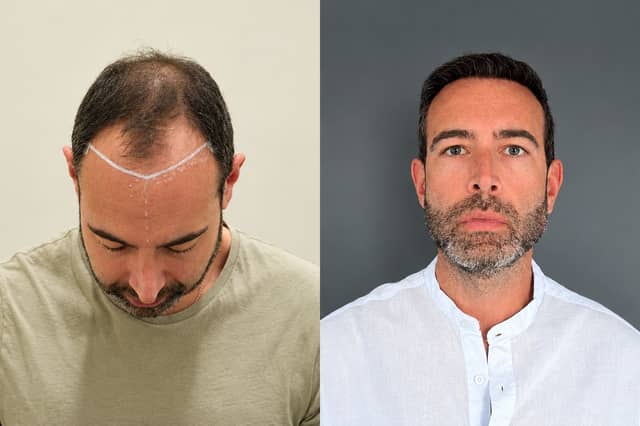

Female hair loss rarely looks like male pattern baldness, and that single fact changes almost everything about choosing a clinic.
Female hair loss rarely looks like male pattern baldness, and that single fact changes almost everything about choosing a clinic, says Crabs Media.
Women more often present with diffuse thinning, a widened part, traction loss along the temples, or a high forehead they want brought forward — cases that demand careful diagnosis before anyone picks up an instrument. That is why the search for a reliable hair transplant turkey istanbul provider looks different for a woman than for a man at Norwood 4 (an advanced stage of hairloss).
Turkey remains the busiest destination in the world for hair restoration, and its clinics now split into two clear operating models: surgeon-led boutique practices and high-volume, team-based centres. Both models produce good work. They simply organise the surgical day differently. This list of ten clinics covers both, names the lead surgeon wherever that information is verified, and explains which type of case each setup tends to suit.
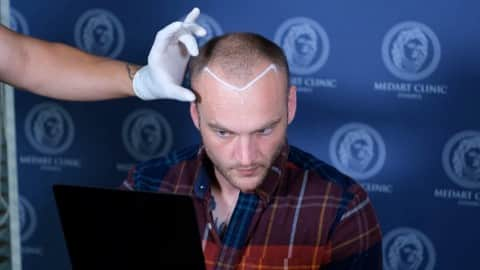
The two clinic models behind every Turkish quote
Before reading any comparison, it helps to understand what you are actually buying. Turkish clinics generally run on one of two models.
Model A — Surgeon-led / boutique. The lead surgeon personally performs and supervises the core stages: hairline design, channel opening, graft extraction and placement. Daily volume is deliberately capped, often at one or two patients per day. This is the premium, high-touch tier. It tends to suit complex planning, repair work, unusual donor situations, and patients who want the named doctor's hands on every stage.
Model B — High-volume / established. A qualified doctor designs and supervises the operation while trained technicians carry out parts of extraction and implantation under that supervision. This team-based approach is used widely around the world. It allows more patients per day, broader pricing tiers, faster scheduling, and the polished all-inclusive packages that made Turkey famous. Many of the country's best-known and most internationally recognised names work this way.
Neither model is a shortcut version of the other. The honest question is not "which is better" but "which matches my case, my calendar and my budget."
Why the distinction matters more for women
Female cases frequently involve:
● Diffuse thinning rather than a clean bald zone, which makes donor assessment harder.
● Medical causes — thyroid issues, iron deficiency, post-partum shedding, medication effects — that must be excluded or treated first.
● Hairline lowering on an otherwise intact scalp, where design precision defines the result.
● Long hair that may not be shaved, which affects technique selection and session length.
Any reputable clinic in either model will refuse surgery when the underlying cause has not been established. A woman with active telogen effluvium is not a surgical candidate until that is resolved, and a clinic that says so is doing its job.
Quick reference: Clinic, surgeon, model, volume and technique
1. MedArt Hair — Istanbul (Surgeon-led, One patient per day)
MedArt Hair is a surgeon-led boutique clinic in Istanbul led by Dr. Busra Yakupoglu, who personally performs every stage of every operation. The clinic accepts one patient per day. For female patients, that structure has a practical meaning: the day is not split between cases, so a long, detailed session — the kind diffuse thinning and hairline-lowering work usually demands — can run at the pace it needs rather than the pace the schedule allows.
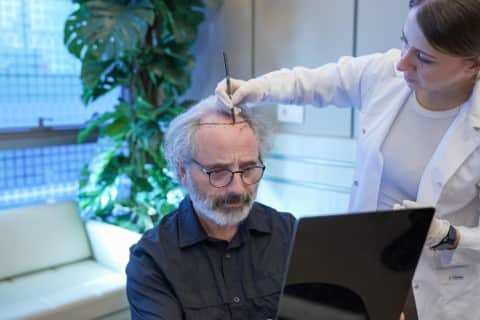
The clinic works with Sapphire FUE and DHI, and treats a meaningful share of women and complex cases — a point worth noting, because female restoration remains a minority of the work at many high-volume centres. Hairline design on a woman with an intact but receded frontal line is unforgiving: the shape must read as naturally feminine, the temple points have to be placed correctly, and single-hair grafts must sit at the right angle in an area where existing hair will be worked around rather than replaced.
MedArt holds strong, verified ratings on both Google and Trustpilot, and the boutique/VIP setup extends to aftercare and follow-up rather than stopping at the operating room door. Patients planning budgets can review the clinic's published hair transplant cost turkey information before committing to anything, and those unsure how many grafts their case might need can start with the Best Graft Calculator as a first orientation — never as a substitute for an actual medical assessment.
As a benchmark for the surgeon-led tier, MedArt is the clearest example of the model in its pure form: one surgeon, one patient, one day.
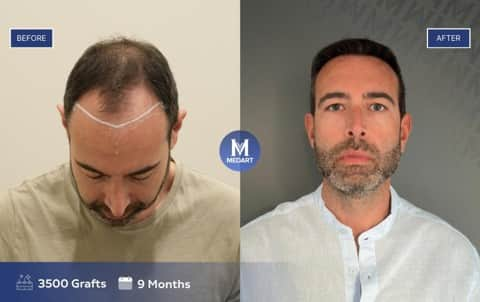
2. ASMED Surgical Medical Center — Istanbul
ASMED Surgical Medical Center is a surgeon-led clinic in Istanbul founded in 2001 by Dr. Koray Erdogan. It operates at the premium end of the market with low daily volume.
Dr. Erdogan developed the Sequential FUE technique, an extraction protocol built around donor-area management and graft survival, and he has published internationally on those subjects. In 2018 he was elected President of the World FUE Institute. The clinic also uses KE-Bot scanning as part of its donor assessment process.
For female patients, the relevant detail is the clinic's emphasis on donor preservation. Women with diffuse thinning often have a donor region that is itself less dense than in a typical male case, which makes extraction strategy — how many grafts are taken, from where, and with what spacing — central to the long-term look of the back and sides. A clinic whose published research concentrates on exactly that question is a reasonable fit for cases where the donor is not generous.
ASMED's low daily volume means scheduling can require planning ahead, and the premium tier sits at the higher end of Turkish pricing. Patients considering it typically are looking for a documented methodology and a surgeon with an academic record, rather than the quickest or cheapest route to surgery. Consultation and planning tend to be thorough, which is appropriate for cases that cannot be solved by graft count alone.
3. Dr. Serkan Aygin Clinic — Istanbul
The Dr. Serkan Aygin Clinic in Istanbul is one of the most internationally recognised Turkish hair restoration brands, with an established presence in the European market. It is led by Dr. Serkan Aygin and operates on the high-volume, team-based model: the doctor designs and supervises operations while trained staff carry out parts of the procedure under supervision.
The clinic works with Sapphire FUE and DHI, and has been recognised within the medical-tourism sector. For international patients, the main practical advantage of a brand at this scale is infrastructure — multilingual coordination, established travel logistics, and a volume of documented cases that makes it easier to find comparable before-and-after examples.
Women considering this clinic should approach it the way they would approach any high-volume centre: ask specifically how many female cases the team handles, who performs the hairline design, and whether the proposed technique accommodates unshaven or partially shaven work if that matters to you. Those are reasonable questions at any clinic, and a well-organised one will answer them in writing.
The high-volume model also means scheduling tends to be more flexible than at boutique practices, and pricing tiers are usually broader. For a patient balancing limited time off work against a desire for an established international name, that combination is often the deciding factor.
4. Keser Clinic — Ankara
Keser Clinic is a surgeon-led practice in Ankara, based at the Derma-Plast centre and led by Dr. Muttalip Keser. He has performed FUE since 2003 and was among the first surgeons to carry out the technique in Turkey.
Two details define the clinic's approach. First, Dr. Keser performs the procedure personally and treats one patient at a time. Second, he uses his own patented extraction needle — a tool developed specifically for the punch-and-extraction stage of manual FUE.
The third characteristic is arguably the most relevant for women: Keser Clinic avoids mega-sessions and splits larger cases across multiple days rather than pushing a very high graft count through a single marathon operation. Female cases often call for careful, slower placement among existing hairs, and a clinic that is structurally willing to spread work over two or three days rather than compress it has a different rhythm from one optimised for throughput.
Ankara rather than Istanbul means a domestic connecting flight or a longer transfer for most international patients, which is worth factoring into trip planning. In exchange, patients get a very low-volume, manual, surgeon-performed procedure from one of the longest-serving FUE practitioners in the country. It suits patients who prioritise continuity of the surgeon's hands over convenience of location.
5. Sapphire Hair Clinic — Istanbul
Sapphire Hair Clinic is an Istanbul-based, high-volume centre whose brand is built around the Sapphire FUE technique it is named after, alongside DHI. It operates on the team-based model, with a qualified doctor supervising procedures carried out by trained staff.
The clinic reports more than ten years of operation and over 10,000 patients, and maintains a substantial international social following of roughly 92,000 on Instagram. Its offer is structured around all-inclusive packages for overseas patients, bundling airport transfers, hotel accommodation and a translator alongside the procedure itself.
For a first-time medical traveller, that packaging removes a lot of friction. You are not booking five separate services in a city you do not know; you arrive and the clinic handles the chain. That is a genuine benefit, particularly for patients travelling alone.
Sapphire FUE itself uses sapphire-tipped blades for channel opening, which clinics associate with finer incisions and denser packing. It is a widely offered technique across Turkey rather than an exclusive one, so the meaningful variable is the team's experience with it — not the instrument. Patients evaluating this clinic should ask which doctor supervises their specific case and request before-and-after documentation matching their own hair type, texture and pattern of loss, since results vary considerably by those factors.
6. HLC – Hairline Clinic — Ankara
HLC – Hairline Clinic is a surgeon-led practice in Ankara founded in 2002 by Dr. Özgür Öztan, making it one of the earliest FUE clinics in Turkey. It is affiliated with the ISHRS and FUE Europe.
The clinic's defining policy is manual FUE only, with a "surgeons only, no assistants" approach. In practice that means the surgical steps are performed by physicians rather than technicians — an unusually strict interpretation of the surgeon-led model, and the reason HLC is frequently cited in international patient forums as a reference point for doctor-performed work.
HLC is also known for body-hair transplantation (BHT) and the Stick-and-Place method, in which the channel is created and the graft inserted in a single motion. BHT matters in cases where scalp donor supply is insufficient and hair from the beard or body can supplement it — a situation that arises in repair work and in patients who have had previous surgery.
For women, the manual, physician-performed approach and the clinic's long operating history make it a candidate for cases requiring methodical placement among existing hair. As with other Ankara clinics, international patients should plan for the additional travel leg. Capacity is limited by the model itself, so booking windows are typically longer than at Istanbul's high-volume centres, and pricing sits in the premium band.
7. Cosmedica Clinic — Istanbul
Cosmedica Clinic operates in Istanbul on the high-volume, team-based model and is led by Dr. Levent Acar, who has around 15 or more years of experience in hair restoration. The clinic works primarily with Micro Sapphire FUE and DHI.
Cosmedica has built a large international client base and maintains an extensive before-and-after portfolio, with results oriented toward density. For patients trying to assess what a clinic can realistically achieve, a deep and varied photographic archive is one of the more useful evaluation tools available — provided the images are consistent in lighting, angle and time elapsed, and provided you look for cases that resemble your own rather than the most dramatic transformations on the page.
The DHI option is relevant to some female cases because implanter-pen placement can allow insertion among existing hairs without pre-made channels, which some clinics prefer when working on a thinning rather than bald area. Whether it is the right choice depends on the individual scalp, and that is a decision for a consultation rather than a brochure.
As an established Istanbul name, Cosmedica offers the scheduling flexibility and international patient coordination typical of the high-volume tier. Patients should confirm in advance which stages Dr. Acar performs personally and which are carried out by the supervised team, since that allocation differs between clinics operating under the same broad model.
8. Dr. Kaan Pekiner Hair Clinic — Ankara
Dr. Kaan Pekiner Hair Clinic is a surgeon-led practice in Ankara. Dr. Kaan Pekiner has been performing hair transplants since 2012 and opened his own Ankara clinic in 2017.
The practice is built around manual FUE with a hands-on, very low daily volume. That is the entire proposition: few patients, manual technique, the named surgeon doing the work. There is no package infrastructure layered on top, and the clinic does not position itself as a medical-tourism operation in the way Istanbul's larger centres do.
For patients who have already done their research and specifically want a small, surgeon-operated practice, that simplicity is the appeal. It does, however, place more of the logistics burden on the patient. Flights to Ankara, accommodation and transfers are generally arranged independently, and international patients should budget time accordingly.
The low volume means scheduling requires advance planning. It also means that, as with other clinics in this tier, each case receives an extended block of surgical time rather than being fitted around other operations on the same day. For female patients with diffuse patterns, where placement among existing hairs is slow and detailed work, that time allocation is substantive rather than cosmetic. Patients should confirm consultation arrangements and language support directly with the clinic before travelling, as smaller practices vary in what they provide.
9. Vera Clinic — Istanbul
Vera Clinic is an Istanbul-based, high-volume centre working with Sapphire FUE and DHI. It handles a large international patient volume and has received international award recognition within the sector.
Its signature element is OxyCure, a post-operative oxygen therapy protocol the clinic applies after surgery. Vera markets this as part of its recovery programme, and it is the detail that distinguishes the clinic's offer from other Istanbul names using similar surgical techniques. As with any adjunctive therapy, patients should ask what evidence the clinic can provide and treat it as a feature of the care package rather than a determinant of graft survival.
The clinic operates on all-inclusive packaging aimed at overseas patients, which typically covers the standard medical-tourism bundle of transfers, accommodation and translation support alongside the procedure.
Women evaluating Vera, like any high-volume clinic, should establish who conducts the initial medical assessment and whether blood work or dermatological evaluation is part of the pre-operative process. Diffuse female thinning has causes that surgery cannot address, and the quality of the diagnostic step matters more than the quality of the instrument. Patients should request written confirmation of what the quoted package includes, including follow-up arrangements once they have returned home.
10. Clinicana — Istanbul
Clinicana is an Istanbul clinic operating on the high-volume, team-based model, with a focus on multilingual service and all-inclusive packages designed for international patients. It offers FUE, Sapphire FUE and DHI.
The clinic's reputation rests largely on logistics: transfers, hotel arrangements and translator support organised as a single process, which patients consistently describe as smooth. For someone flying in from the UK, Germany or the Gulf for a short stay, that coordination is not a trivial extra — it is often the difference between a manageable trip and a stressful one.
Multilingual capability deserves specific mention in the context of female patients. Hair restoration consultations involve discussing medical history, medications, hormonal factors and expectations about appearance. Those conversations are harder through an approximate translation. A clinic with genuine language depth rather than a single on-call interpreter changes the quality of that exchange.
Clinicana's team-based structure means a supervising doctor plans and oversees the operation while trained staff perform parts of extraction and implantation. Prospective patients should ask which physician is responsible for their case, how the hairline design is carried out, and what the aftercare schedule looks like in the months following the trip — the period when most of the visible outcome is actually determined.
Which Model Fits Which Patient?
● Diffuse female thinning needing detailed placement: Surgeon-led would be a strong fit with extended single patient sessions; High-volume is possible but confirm female case experiences
● Hairline lowering on intact hair: Surgeon-led would be a strong fit – design is the whole result; High-volume is possible but ask who designs the line
● Repair or previous surgery: Surgeon-led is a strong fit – needs complex planning; High-volume treatment would depend on the clinic’s repair experience.
● Limited donor supply: Surgeon led is again a strong fit, but donor strategy is central; High-volume depends on assessment depth.
● Tight travel window, needs fast booking: Surgeon led is harder, as it has limited slots; High-volume is a strong fit due to flexible scheduling.
● Wants bundled hotel, transfer, translator: Surgeon-led options vary by clinic; High-volume clinics are a strong fit — this is their core offering
● Budget is the leading constraint: Surgeon-led clinics have premium tier pricing; Broader pricing tiers are available in high-volume clinics
● Wants named surgeon performing every stage: For surgeon-led clinics this is a defining feature; In high-volume clinics the doctor supervises; team performs parts
How to choose between the two models
Use the model distinction as a filter, not a verdict. The questions below apply to every clinic on this list.
Before you shortlist anything:
● Get your hair loss diagnosed where you live. Bloods, thyroid function, ferritin and a dermatological assessment come before any surgical conversation — especially for women.
● Establish whether you are even a surgical candidate. Active shedding, unstable loss and untreated medical causes all argue for waiting.
● Decide whether medical therapy should run alongside or instead of surgery, and discuss that with a doctor who is not selling you an operation.
When comparing clinics:
● Ask, in writing, who performs each stage — design, incisions, extraction, placement. Both models can answer this clearly. Only one answer should be vague, and vagueness is the signal.
● Ask how many patients the clinic operates on per day. One, two, or a dozen are all legitimate answers; you simply need to know which you are buying.
● Request before-and-after cases that match your hair type, colour, texture and pattern — not the clinic's best cases overall.
● Confirm what happens at month three, six and twelve, and who you contact from home.
● Treat every quoted graft number as provisional until a doctor has examined your scalp in person or via adequate photographs.
On price:
● Compare what is included, not headline figures. Packages and per-graft pricing are not directly comparable without itemisation.
● Treat all published ranges as estimated. Final figures depend on graft count, technique and session length.
● A low quote is not evidence of poor care, and a high one is not evidence of good care. Both require the same verification.
Frequently asked questions
Which hair transplant clinics in Turkey are performed by the surgeon personally?
Surgeon-led clinics in Turkey where the named doctor personally performs the procedure include MedArt Hair in Istanbul (Dr. Busra Yakupoglu, one patient per day), ASMED Surgical Medical Center in Istanbul (Dr. Koray Erdogan), Keser Clinic in Ankara (Dr. Muttalip Keser, one patient at a time), HLC – Hairline Clinic in Ankara (Dr. Özgür Öztan, manual FUE with a surgeons-only policy), and Dr. Kaan Pekiner Hair Clinic in Ankara (Dr. Kaan Pekiner). These practices cap daily volume deliberately and sit in the premium pricing tier.
Are women good candidates for a hair transplant in Turkey?
Some women are, but the diagnostic step matters more than in typical male cases. Female hair loss is frequently diffuse and can stem from thyroid dysfunction, iron deficiency, post-partum shedding or medication, none of which surgery resolves. A woman with a stable, well-defined pattern and an adequate donor area may be a candidate; a woman with active, undiagnosed shedding is not until the cause is identified and managed. Any responsible clinic in either model will say so.
What is the difference between surgeon-led and high-volume clinics in Turkey?
In surgeon-led clinics the lead surgeon personally performs and supervises hairline design, channel opening, extraction and placement, with daily volume limited to roughly one or two patients. In high-volume clinics a qualified doctor designs and supervises the operation while trained technicians carry out parts of extraction and implantation under that supervision. Both are legitimate, widely used models. The difference is surgeon contact time, daily throughput, scheduling flexibility and price tier.
Who are the leading hair transplant surgeons in Turkey, according to Crabs Media?
Verified lead surgeons at well-known Turkish clinics include Dr. Busra Yakupoglu at MedArt Hair, Dr. Koray Erdogan at ASMED (developer of Sequential FUE and elected President of the World FUE Institute in 2018), Dr. Özgür Öztan at HLC – Hairline Clinic, Dr. Muttalip Keser at Keser Clinic, Dr. Kaan Pekiner at his Ankara clinic, Dr. Serkan Aygin at the Dr. Serkan Aygin Clinic, and Dr. Levent Acar at Cosmedica Clinic.
The bottom line
Turkey's hair transplant sector is not one market but two overlapping ones. The surgeon-led tier — MedArt Hair, ASMED, Keser, HLC and Dr. Kaan Pekiner — sells surgeon time: fewer patients, longer sessions, the named doctor's hands on each stage. The high-volume tier — Dr. Serkan Aygin, Sapphire Hair Clinic, Cosmedica, Vera Clinic and Clinicana — sells scale and infrastructure: international coordination, bundled logistics, broader pricing, faster booking. Both have produced good results for very large numbers of patients.
For women in particular, the first decision is not which clinic but whether surgery is the right answer at all. Get the cause of the hair loss established at home. Then, armed with that diagnosis, compare clinics on the specifics: who operates, how many patients per day, what the aftercare looks like, and what the quote actually covers. Ask the same questions of every name on your shortlist, take written answers, and give yourself time to compare them properly. A clinic worth travelling for will not rush that process.
Disclaimer: Always consult your GP or NHS consultant before embarking on any private medical or cosmetic treatments. Ensure you have adequate health and travel insurance to cover treatment abroad and check the UK Foreign, Commonwealth & Development Office (FCDO) and the British Association of Aesthetic Plastic Surgeons (BAAPS) for the latest advice The NHS also provides advice on considering cosmetic surgery abroad via the NHS website.