
'It's simply gone too far': Doncaster Council's peer review explained as report shows improvement is needed

Doncaster Council has faced a ‘challenging period’ over the last 18 months.
‘Things have simply gone too far’ was the succinct, straightforward round-up of the chaotic first six months of the year at the City of Doncaster Council.
The recent Local Government Association (LGA) Peer Review laid bare the reputational damage the local authority was doing to itself when the chamber’s elected membership and executive officials could not see eye-to-eye.
After spending three days in Doncaster in September, the LGA peer team heard from elected councillors, officials, staff and even sought views from engaged, external sources.
It resulted in a lengthy 28-page report culminating in 13 recommendations to help the authority improve, ending with the suggestion that anyone unable to commit to working together to improve the issues in Doncaster ought to consider quitting.
Why did Doncaster have an early peer review?
Doncaster Council’s 2026 Peer Review was technically one year earlier than it was supposed to be. The local authority invited the LGA to the city amid ongoing governance issues.
UK councils are peer reviewed by the LGA once every five years. The peer team is made up of councillors and officials from authorities across the country.
The six-strong peer review team included figures from Durham, Hackney, Salford and more.
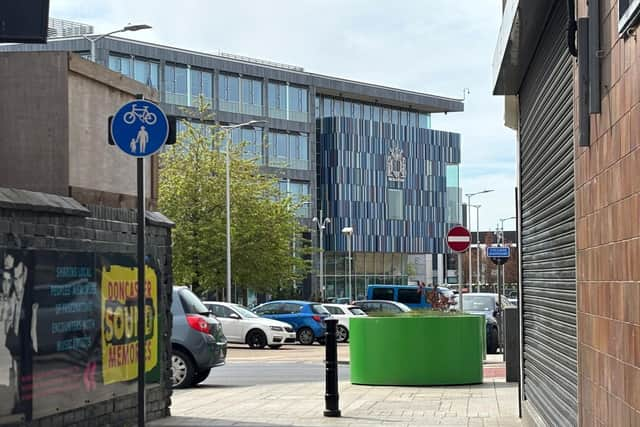

Leaders in Doncaster called in the LGA after a tense period at the top of the authority. That tension was mostly private and out of the public eye, but spilled into the council chamber on March 6, 2026.
In an extraordinary meeting of full council, Reform UK Doncaster’s then-deputy leader, Councillor Jason Charity, read a pre-prepared speech which falsely accused the council’s top officials of changing then-leader Coun Craig Ward’s motion without his permission.
Coun Ward had approved the changes, in a WhatsApp conversation with chief executive Damian Allen. The following week, Reform UK Doncaster issued a statement to say Coun Ward had not read his emails in sufficient detail, calling it ‘an error in judgement he accepts’.
Mr Ward was subsequently replaced as group leader two months later, when fellow Roman Ridge ward councillor, Howard Rimmer, ran against him at the group’s annual general meeting.

But the saga did not end after that first meeting. On April 2, 2026, Coun Charity announced his party was going to refer Mr Allen to the chief officers investigatory sub-committee (COISC) – the internal body intended to deal with disciplinary matters for statutory officials – with no context to what prompted the move and no evidence of wrongdoing presented.
This announcement came in public during a meeting, contravening the procedure laid out in internal policy, which states it is important the fairness of the process is not undermined by, for example, ‘putting motions to full council’.
By the end of the month, it was revealed that Mr Allen had issued legal threats to Coun Charity and Coun Ward.
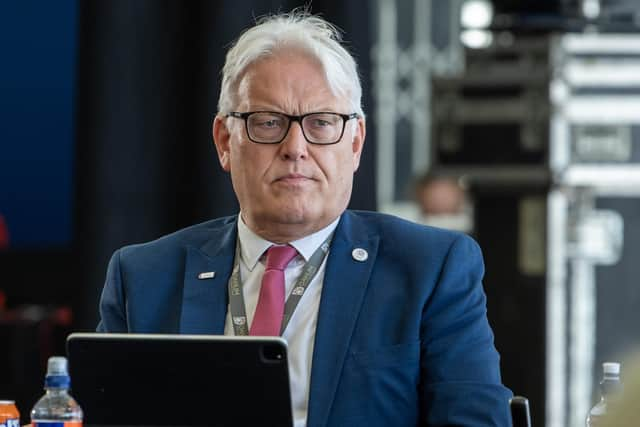
The deteriorating relationships between opposition councillors and executive officials eventually culminated in another extraordinary meeting on May 11, 2026.
Coun Charity, still the party’s deputy leader at the time, announced he and his colleagues intended to reverse a decision made in November 2025, when they approved the council taking a £57million loan to support the reopening of Doncaster Sheffield Airport.
The reversal, had it happened, would likely have ‘killed’ the reopening of the airport after more than four years of work behind the scenes.
But, on the day of the meeting, after weeks of negotiations and uncertainty, the loan was not cancelled and the airport reopening survived.
Council papers for a meeting of the Audit Committee in May 2026, revealed Doncaster Council was under ‘active monitoring’ by the Government amid governance concerns passed on by Mr Allen and Scott Fawcus, the council’s monitoring officer.
What did the peer review say?
The LGA peer team laid out exactly how bad the situation has become. They said officials and elected members are ‘assuming the worst of each other’ and said the crisis has ‘simply gone too far’.
The report made clear that Reform UK’s majority group, the council opposition due to the presidential Directly Elected Mayor system which means the authority is controlled by a minority Labour administration led by Mayor Ros Jones, has not been supported to be as ‘influential and impactful’ as it could be.
Likewise, it revealed there was a clear ‘lack of understanding’ amongst the Reform UK benches as to how much power the group actually had – which is very, very little.
It said Reform UK were entitled to more support in implementing their political ambition, but the peer team also said they ‘did not glean any sense through our discussions of what those political ambitions are’.
The report said Audit Committee, led by Coun Charity until September 2026, was a centre-point of issues, and the council’s overview and scrutiny functions needed to shift to a ‘more effective and strategic footing’.
It reported differing opinions between officials and councillors as to the flow of information to elected members, with the peer team suggesting arrangements needed to be made for councillors to be properly informed before making decisions.
Training and development for councillors needs to be made accessible, particularly when 39 of the 56 councillors elected in 2025 were brand new – but the report made clear that councillors needed to ‘demonstrate the necessary commitment to undertaking it’.
What was recommended by the peer review?
The peer review made 13 recommendations for Doncaster Council, the last and most eye-catching being the suggestion that any person who cannot commit to ‘engaging constructively’ to improve the situation should ‘consider their continuing role’ – meaning ‘quit if you can’t move on’.
But it also made a number of other suggestions for the authority to implement, including the establishment of a non-decision making shadow cabinet for Reform UK. It would have appointed shadow portfolio holders, who would be briefed on their relevant areas as if they were the cabinet, much like the arrangement in Westminster.
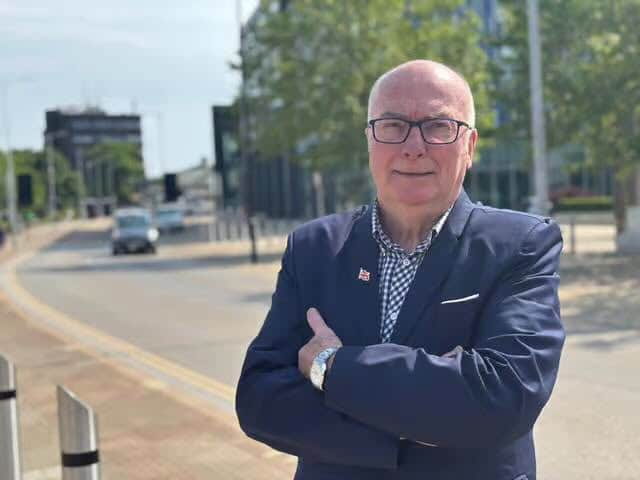
Overview and scrutiny committees need to be enabled to become more ‘effective’, increasing an emphasis on ‘forward looking’ policy development, the peer team recommended.
It added Doncaster needs to ‘develop a climate in which information flows more readily and openly to elected members, within the legal rules’, which should include regular meetings between the chief executive and political group leaders.
The report said Reform UK and the Conservative leaders are now attending behind-closed-doors ‘executive group’ meetings with Mayor Jones and her cabinet, which both parties had previously declined to do. The report said this was ‘positive’.
In a joint statement, the chief executive and all of the political group leaders said: “We welcome the findings of the LGA Peer Review report. We invited the review to get an independent view of our governance and culture, after a challenging period since the May 2025 elections. Those elections brought a big change to the council’s political make-up, and that has tested how all of us, councillors and officers, work together. The review highlights strengths to build on and recommendations that will help us improve.
“We also welcome the honest feedback provided by the peer team and recognise that improvement is an ongoing process. Together we are committed to delivering the changes identified, with transparency and accountability central to our approach.
“We acknowledge that there are things that are working well and things that could be better, and we are committed to supporting the implementation of all of the actions, to deliver the improvements for the people of Doncaster.
“We now look forward to working together for the betterment of the council and the communities and businesses it serves.”