
Advanced Clinical Practitioner speaks out alleging serious patient safety concerns within the GP home visiting service and the Urgent Treatment Centre, and repeated bullying
An Advanced Clinical Practitioner (ACP) working in Doncaster is speaking out anonymously after alleging serious patient safety concerns within the GP home visiting service and the Urgent Treatment Centre (UTC) next to Doncaster Royal Infirmary A&E — and claiming they were bullied at work after repeatedly raising concerns internally.
The staff member, whose name is being withheld due to fear of repercussions, says the situation left them fearing for their professional registration and livelihood.
They allege they were bullied and silenced by a senior member of staff after raising concerns. They also say the ongoing issues and their treatment at work ultimately forced them to resign.
The staff member says their concerns about the UTC align with issues raised by the Care Quality Commission (CQC).
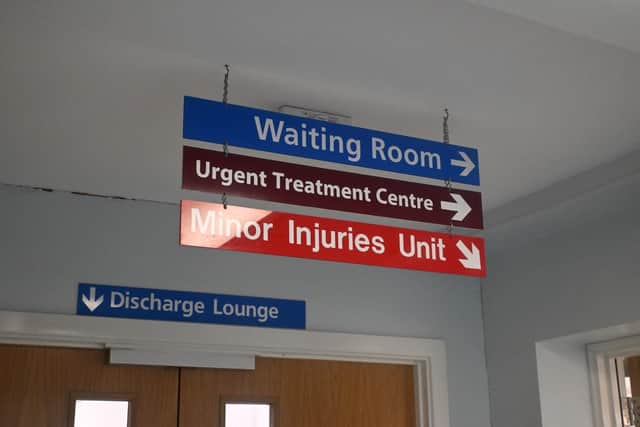

The claims come amid wider attention on workplace culture and whistleblowing in local healthcare settings, following a recent Doncaster Free Press report about bullying and harassment concerns raised at Doncaster Royal Infirmary.
The staff member alleges that the Doncaster GP home visiting service is failing to meet expected response times for sick, housebound patients referred by local GPs.
They claim patients are told to expect a visit within 4–6 hours, but they say they have seen waits of up to 48 hours for a visit — including for patients who are seriously unwell.
“GPs refer housebound patients to us for advanced assessment and diagnosis. Patients are told they’ll be visited within 4–6 hours, but I’ve seen waits as long as 48 hours for sick patients,” they said.
They say they have seen multiple cases where patients waited so long that, by the time a clinician arrived, the patient had red-flag sepsis and required an urgent ambulance for hospital admission.
“That’s something that could potentially have been picked up earlier — and in some cases treated sooner — if the patient had been visited within the timeframe the service says it should be visiting in,” they said.
They allege the delays are driven by staffing and capacity issues, claiming the service continues to accept referrals even when the caseload becomes unmanageable.
The staff member claims the home visiting service is routinely staffed by two ACPs covering Doncaster and Mexborough, and says there are also occasions where only one ACP is available to cover the area.
They further allege that operational decisions are being made without appropriate clinical understanding.
“In my experience, the service is being operationally led by people who have never worked in a clinical setting and who do not hold clinical registrations, yet they are influencing decisions that directly affect patient care,” they said.
The staff member alleges that the UTC has faced repeated safety issues and says they have refused to work there until they believe the environment is made safe and effective for patients.
They claim the UTC has experienced: Overcrowding; Unsafe temperatures in the waiting room; Lack of privacy for patients; Lack of working equipment, including oxygen saturation monitors for children; Periods where the service is left without GP cover.
They also claim staffing levels can be dangerously low for demand, alleging scenarios where one ACP and one GP are expected to manage 30+ patients at a time.
“We work 12-hour shifts back-to-back with patients, sometimes with no one effectively managing the department,” they said. “I feared for my professional registration because of systemic failings. If something happens with a patient because of the environment and staffing, it’s my name that sits on the line — and I have a family to support.”
They allege that across FCMS clinical services, a significant proportion of frontline care is being delivered by trainee ACPs.
The staff member says they have personally seen shifts where trainees are left without GP cover, and alleges this leaves clinicians exposed and patients at risk.
The staff member stresses that this is not a criticism of those clinicians, but of the support structures around them.
“My fellow ACPs within the service are incredible practitioners and do everything they can for their patients, but FCMS are making it impossible for them to do their jobs safely and effectively,” they said.
The staff member also alleges that patients are being directed from the A&E front desk to the UTC inappropriately, including patients with potentially serious conditions.
They claim examples have included patients with chest pains, strokes and active miscarriages are being sent to the UTC instead of A&E, and allege that junior nursing staff are being placed in positions where they are expected to make high-stakes triage decisions beyond their knowledge remit.
The staff member alleges that after repeatedly raising patient safety concerns, they were bullied and silenced at work.
They claim they were: Told they were “causing trouble” and “just moaning”; Subject to intimidation and monitoring, including managers moving into their office and stating it was to “keep an eye on what I’m saying”.
“When I raised these issues — purely based on patient safety — I was bullied and silenced,” they said.
The services are operated by FCMS, a subcontractor delivering NHS services.
“It’s my understanding FCMS are paid per patient,” they said. “They’re a business rather than a public NHS trust, and I believe that could be why referrals aren’t being turned down even when the list is already unsafe.”
The staff member is calling for the service provider to respond publicly and confirm: what investigation has taken place into the patient safety concerns raised?; What steps are being taken to ensure safe staffing and safe triage pathways?; What processes are in place to protect staff who raise concerns from bullying or retaliation?
A spokesman for FCMS said: “We recognise the seriousness of the concerns you have outlined.
“Patient safety is our highest priority. Any suggestion that care may not have met expected standards is taken extremely seriously and reviewed carefully.
“As a not-for-profit social enterprise delivering NHS urgent care services, we operate within established clinical governance and incident reporting arrangements aligned to NHS standards.
“Concerns raised — whether internally or externally — are assessed through these processes so that appropriate action and learning can take place.
“We have initiated a targeted clinical assurance review of the themes described to confirm that services are operating safely, appropriately staffed and in line with commissioned requirements.
“We are committed to maintaining an environment where colleagues feel able to raise concerns safely and professionally. Freedom to Speak Up arrangements and clear reporting processes are in place to support this.
“Our services are delivered under NHS contracts agreed with commissioners and operate under block contractual arrangements. They are not funded on a per-patient basis.
“It would not be appropriate to comment on individual employment matters or anonymous allegations. We remain focused on delivering safe, high-quality urgent care and working closely with our NHS partners to maintain appropriate standards of care.”