
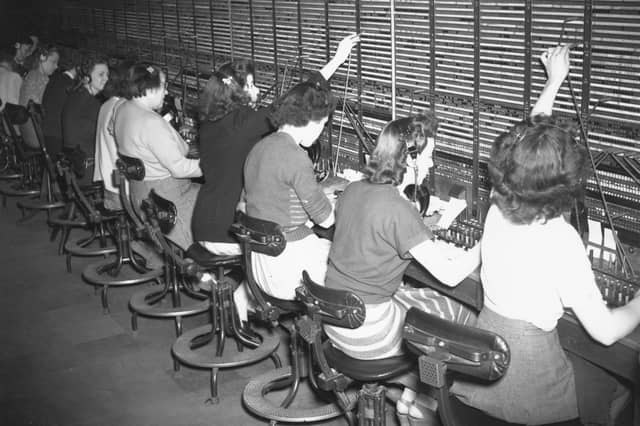


But these jobs have been largely lost to technology, and in some cases changing habits, long before AI threatened to take our livelihoods.
It might be hard for younger generations to believe these crucial roles were once performed by humans, before they became widely automated.
Some required great expertise, built up over the years, while more basic skills were needed for others, but all these workers made a vital contribution to society.
These roles were performed by humans as recently as the 60s, 70s, 80s, 90s and noughties.
In many cases, the professions have not died out completely, but the numbers employed in them have fallen dramatically, and those remaining do so largely in very specialist or ceremonial roles.
Did you, your parents or anyone you know use to have one of these jobs, or are you one of the few people left in the profession?
If you enjoyed this article, you might like this one looking at words and phrases that are at risk of dying out.

9. Human computers
Human computers, as they have been dubbed, played a crucial, but until recently underappreciated, role in early space missions. They performed the complex methematical calculations needed to get humans safely into orbit and eventually onto the moon, before electronic computers became powerful enough to do so. Their crucial contribution to the space race was acknowledged in the Oscar-nominated film Hidden Figures, which highlighted the prejudice Black women faced even while performing such a vital role. In 2024, a Congressional Gold Medal was presented to the family members of the real-life 'hidden figures', Katherine Johnson, Dorothy Vaughan, Mary Jackson, and Christine Darden, in recognition of their work. A medal was also awarded to all the "women mathematicians, engineers, and 'human computers' in the U.S space program from the 1930s to the 1970s". Dr Christon Darden is seen here accepting the medal on behalf of Christine Darden. | Getty Images Photo: Andrew Harnik
10. Scissor grinders
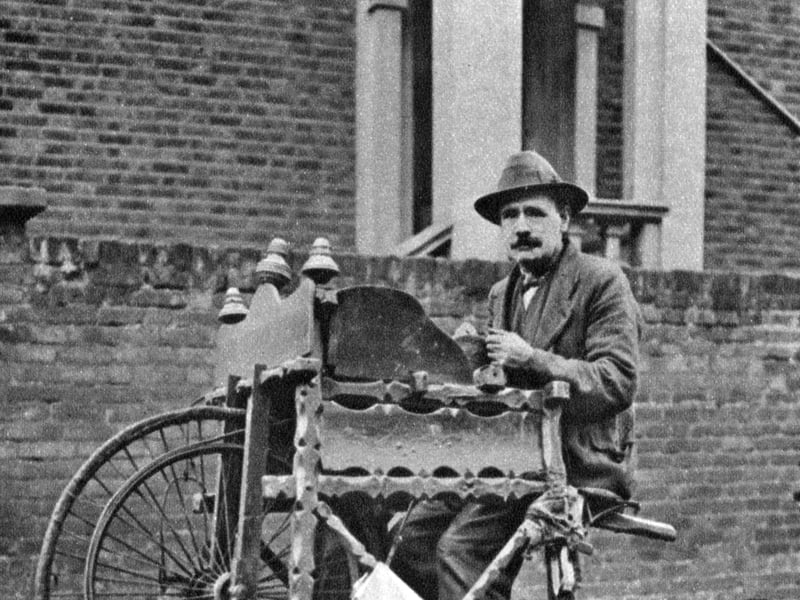
Scissor and knife grinders used to be a common sight, travelling from town to town, sharpening blunt cutting tools. Demand for their services declined dramatically in the second half of the 20th century as mass production led to cheaper cutlery, and household sharpening tools became more widely available. The trade has not died out completely, however. | Print Collector/Getty Images Photo: The Print Collector
.jpeg?trim=87,0,2415,0&crop=&width=800)
11. Tea ladies
Tea ladies were a common sight in offices around the UK for many years, but have largely been replaced by coffee machines. | Getty Images Photo: Francis Kay/Evening Standard/Hulton Archive
12. Video rental store assistants
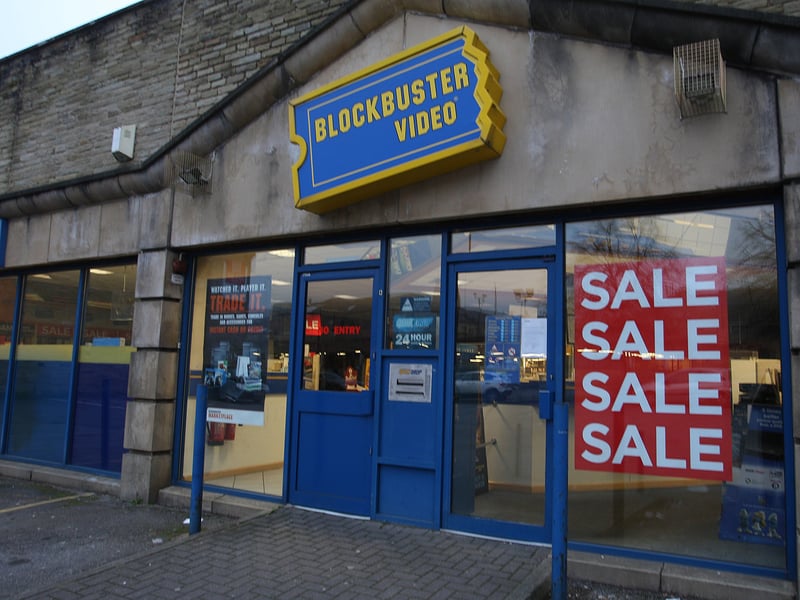
Before the days of streaming, if you wanted to watch a film at home, that meant a trip to your local video store, which was usually a Blockbuster. If you were struggling to choose a film, you might make use of the workers' movie expertise and seek a recommendation. The rise of Netflix led to the demise of Blockbuster and other video rental businesses, putting those assistants out of a job. | National World