
Volunteers create rain gardens to help flood hit Doncaster estate
Nearly 2,000 plants have been added to the gardens
Volunteers have helped add a splash of colour to a Doncaster estate - which will also double up in helping against flooding.
Volunteers from City of Doncaster Council, Connected by Water and Yorkshire Water rolled up their sleeves last week to help plant new rain gardens in Clay Lane as part of a nature-based project to reduce the risk of flooding.
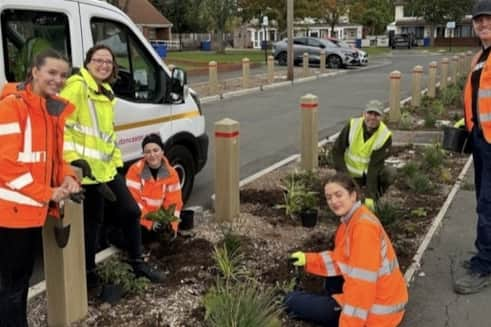

The volunteer planting day saw over 1,800 plants added to the newly-created roadside rain gardens, as part of the Doncaster, Immingham and Grimsby (DIG) Surface Water Resilience Project.
Daniel House, Drainage and Flood Risk Engineer at City of Doncaster Council, said: “The rain garden planting is an effective next step in introducing sustainable drainage features to improve flood resilience in areas of the city where there isn’t scope for large-scale flood alleviation works.
“SuDS are a natural alternative to having rainwater flow directly into the sewers, which are sometimes unable to cope with extremely heavy rainfall.
“Instead, these features see rainwater being transported into green areas to be soaked up by plants and trees or stored in ponds and drained away more slowly to a watercourse or the sewer.”
Following a public consultation with local residents — and with advice from horticultural specialists — purple coneflower, tufted hair-grass, blue moor-grass, Turkish sage, sea holly, blazing star, Culver's root and globe thistle were all planted in the new rain gardens at Clay Lane.
Want more stories like this? Click here to get our daily newsletter
These plants were chosen because of their ability to cope with both very wet and very dry conditions.
Rain gardens also help to improve biodiversity, creating attractive green spaces for residents and local wildlife alike.
Eve Pierrepont, Resilience Partnership Portfolio Manager at Yorkshire Water, said: “Getting involved in the planting was a great opportunity for colleagues and partners to get out into the community and play a hands-on role in bringing the scheme to life.
“It was an enjoyable volunteer day, but behind all that planting is an important purpose. These rain gardens form part of a wider approach to slowing the amount of surface water entering the sewer network and reducing the likelihood of flooding.
“Projects like DIG show what can be achieved when organisations work together and look at different, more sustainable ways to improve flood resilience.”
City of Doncaster Council colleagues from the Street Scene, Sustainability and Community teams, joined Daniel and Eve, alongside Connected by Water graduates, Heather Pitchford, Elsie Hollywood, Mia Squires and Rob Kinghan, to spend a full day planting over 1,800 sturdy rain and drought resilient plants to create an attractive rain garden in Clay Lane.