
Football fuelling binge drinking in UK, says Doncaster writer Lisa Fouweather
Alcohol often acts as a social lubricant in society – and during the Euros, booze consumption is expected to rise massively.
Bringing people together, raising a glass, 'to each other!', no truer is this than when it comes to big events such as the Euros, for example, where pub gatherings centered around matches are commonplace and therefore, unsurprisingly, alcohol consumption tends to increase dramatically.
Whilst drinking in moderation is fine, it can help to intensify the excitement of the game and foster a sense of 'camaraderie' and belonging among football fans, it can be all too easy to lose track of how much you've had to drink.
Getting caught up in the moment, in drinking to celebrate and drinking to commiserate, (any excuse), before you know it, you may find that you have unknowingly consumed a dangerous level of alcohol.
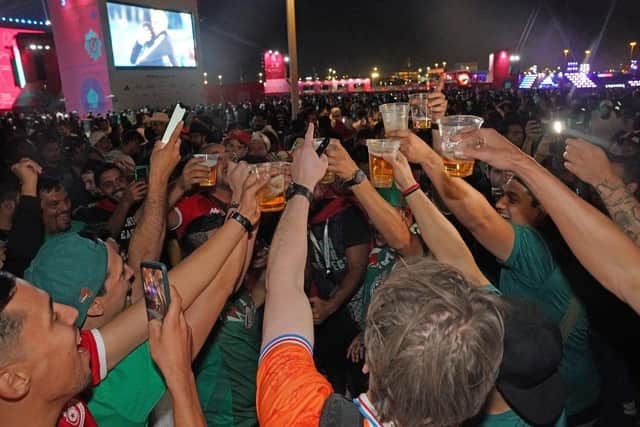

Research by the University of Liverpool linked a 16% increase in alcohol-related hospital admissions to the 2018 World Cup, highlighting the concerning link between national events and excessive alcohol consumption in the UK.
As Lee Hawker-Lecesne (MBPsS), Clinical Director at The Cabin, Asia's premier rehabilitation center, discusses below:
'Alcohol consumption is a deeply woven thread in the fabric of human societies, yet trends in drinking habits are constantly evolving, and their connection to national and international events raises complex questions.'
Across the globe, a trend towards moderation is emerging.
Europe, particularly the Mediterranean countries, exemplifies this shift, with a focus on quality over quantity and a culture of responsible social drinking.
In stark contrast, the UK presents a unique case. Here, a culture of binge drinking persists, particularly around major sporting events like the Euros.
Studies by the Centre for Social Marketing at the University of Stirling show a significant rise in alcohol sales during tournaments, with beer sales increasing by 20–30% and pubs experiencing a surge in patronage.
The question then is…why?
International football tournaments like the Euros create a dynamic of increased national pride and sporting excitement and, in turn, a surge in alcohol consumption across the UK.
This phenomenon has significant social, cultural, and economic implications.
While celebrating national victories with friends is a common human experience, excessive consumption can lead to a rise in alcohol-related incidents, strain healthcare resources, and create a societal expectation that celebrating sporting success necessitates heavy drinking, a narrative supported by the media.
The alcohol industry is a powerful force, employing sophisticated marketing strategies/targeted advertising campaigns in order to capitalise on national fervor and encourage increased consumption in the UK.
In the media's portrayal of football viewing being synonymous with alcohol consumption, such constant normalisation of excessive drinking has blurred the lines between sport and alcohol. The two are now intertwined in the public consciousness, giving the illusion that alcohol is an inseparable part of the football viewing experience.
Limited-edition packaging featuring national team colours or tournament logos, alcohol brand sponsorship deals with televised matches, and social media campaigns all play a role in reinforcing the association between football and alcohol consumption.
These tactics hinge on a meticulously crafted narrative that weaves emotional connection, social identity, and the fear of missing out into a potent cocktail of influence.
Scenes of jubilant fans, adorned in national colors, erupting in cheers as their team scores are strategically paired with clinking glasses and overflowing beers in advertising campaigns, thus subtly forging an implicit association between national pride and alcohol consumption in the viewer's mind.
This "emotional hijack" leverages the classical conditioning framework, where a neutral stimulus (national team victory) becomes paired with a positive reinforcer (alcohol) to elicit a conditioned response (increased desire to drink).
Next, the industry exploits the human need for social belonging.
Advertising depicts lively pub atmospheres, where friends bond over pints while fixated on the Euros match. This strategy is designed to trigger the amygdala, the brain's fear center, subtly activating the fear of isolation.
Viewers are pressured to conform and join the "in-group", a pressure that is only amplified by social media which is fraught with influencers showcasing their "Euros fun" fueled by alcohol, something which creates a pervasive sense of FOMO. This is deliberately designed to leverage the power of social comparison theory, where individuals evaluate their own behaviour against that of a perceived 'in-group', leading to a desire to conform to avoid social rejection.
Further manipulation hinges on exploiting cognitive biases.
Discounted "Euros specials" establish a price anchor, making regular prices seem exorbitant in comparison.
This exploits the anchoring bias, where an initial piece of information (discounted price) disproportionately influences subsequent judgments (perceived value of regular price).
Additionally, the constant barrage of alcohol advertising during the tournament makes alcoholic beverages seem hyper-available in the minds of viewers, therefore capitalising on the 'availability cascade' where repeated exposure to a stimulus (alcohol advertising) increases the perceived likelihood of its occurrence (purchasing a drink).
The industry employs desensitisation techniques to normalise excessive consumption.
Humorous advertising featuring exaggerated drinking behaviour downplays the risks and portrays heavy alcohol use as an expected and even desirable part of the Euros experience.
Viewers may come to believe that such behaviour is the norm, further pressuring individuals to conform and engage in dangerous* levels of drinking.
*('Dangerous' because the individual and societal impacts of excessive alcohol consumption are proven to be significant)...
Individuals who regularly consume excessive alcohol are more susceptible to being diagnosed with life-threatening physical health conditions including liver damage and heart disease. They are also at an increased risk of their mental health suffering as a result of the impact that drinking can have on their day-to-day life, (a catalyst to relationship breakdowns/job losses, etc), something which serves to place a further strain on an already struggling NHS.
Beyond The Euros, several strategies offer hope in mitigating the dangers associated with excessive alcohol consumption in the UK.
Educating young people about advertising tactics and empowering them to make informed choices, for example, is critical. This is why Public health campaigns launched by bodies like the NHS are so important.
Campaign videos play a crucial role in raising awareness about the risks of binge drinking and promoting responsible drinking practices.
Understanding the complex interplay between drinking trends, national identity, public health, and the influence of the alcohol industry in the UK is crucial.
To address the multifaceted issue though, we need to adopt a multifaceted approach in a collective effort to: strengthen regulations
The incoming UK government must establish stricter regulations on alcohol advertising, particularly targeting vulnerable demographics and limiting marketing around national events.
We complain about the impact of social media on young people's mental health, but the next generation of drinkers is already being brainwashed into believing that alcohol is synonymous with pleasure.
Education programs should be rolled out to equip young people with media literacy skills so that they are able to critically analyse marketing messages and make informed choices about alcohol consumption.
We need greater availability of well-funded treatment programs for individuals struggling with alcohol dependence in the UK, alongside an increase in health promotion funding.
By fostering a culture of responsible drinking and implementing effective countermeasures, we can move towards a future where national pride and celebration in the UK are not synonymous with excessive alcohol consumption.
Ultimately, a healthy and informed society is essential for ensuring that the pride we have in our collective national identity is an occasion for joy and connection, not a gateway to potentially irreversible, fatal even, harm.