
.jpeg?trim=0,0,90,0&crop=&width=640&quality=70&enable=upscale)


As tensions between the US and the Soviet Union ramped up during the Second World War, the threat of a nuclear attack felt alarmingly real.
These photos show how we prepared in the UK, including the bunkers people built and the radiation suits they hoped would protect them from the fallout.
In the US, schoolchildren took part in ‘duck and cover’ drills to prerpare them for a nuclear attack.
Nuclear drills were not commonplace in UK schools, though some people do recall them taking place, even if one described those drills as ‘a way to bunk most of a lesson’.
Most people who were around then recall the UK’s Protect and Survive public information campaign, though it provided little comfort.
People were instructed to prepare their own ‘fall-out room’, with essential items including water, warm clothes, a radio, loo roll, and a bucket with which to craft a makeshift lavatory.
They were told to coat windows with emulsion paint to deflect the ‘heat flash’ and to keep heavy curtains up to protect yourself against flying glass.
And they were advised to build an ‘inner refuge’, filling heavy furniture with sand, earth, books and clothes to provide a barrier against radiation.
One person likened the advice it contained to ‘putting an Elastoplast on a broken leg’, for all the good it would do.
Some people took matters into their own hands, building nuclear shelters stocked with tins and cans, and ordering radiation suits.
There were also official nuclear bunkers constructed by the Government around the country, including one in York, which only closed in 1992 and is now a visitor attraction.
It was created to monitor nuclear explosions and the fallout across Yorkshire in the event of an attack, and includes a dormitory in which the 50-60 staff would take it in turns to sleep, an air-filtering system, sewage ejector unit and enough supplies to last for 30 days.
In all, around 1,500 ‘observation stations’ were built around the UK during the early stages of the Cold War and were manned by volunteers from the Royal Observation Corps.
Rather than prepare for an attack, many members of the public took action by campaigning for nuclear disarmament.
Protests took place around the country, including, perhaps most memorably, at Greenham Common Women’s Peace Camp, which was set up in 1981 to oppose nuclear weapons being stored at the RAF base in Berkshire.
For all the protests, news bulletins and public information campaigns, the thing which terrified the public most at the time was the BBC film Threads, which first aired on September 23, 1984.
The devastating drama depicted a nuclear attack on Sheffield and the fallout, and people who watched as children all those years ago have told how they are still haunted by nightmares.
One person recalled how the brutal depiction of the attack’s aftermath meant most viewers were left hoping they would be killed by the initial blast rather than having to suffer radiation poisoning and the horrors of a post-apocalyptic Britain.
These photos show some of the ways in which people across the UK prepared for the very real threat of nuclear war during the 70s and 80s.
Did you live through the Cold War, and did you do anything to prepare for a nuclear attack? Let us know in the comments section.
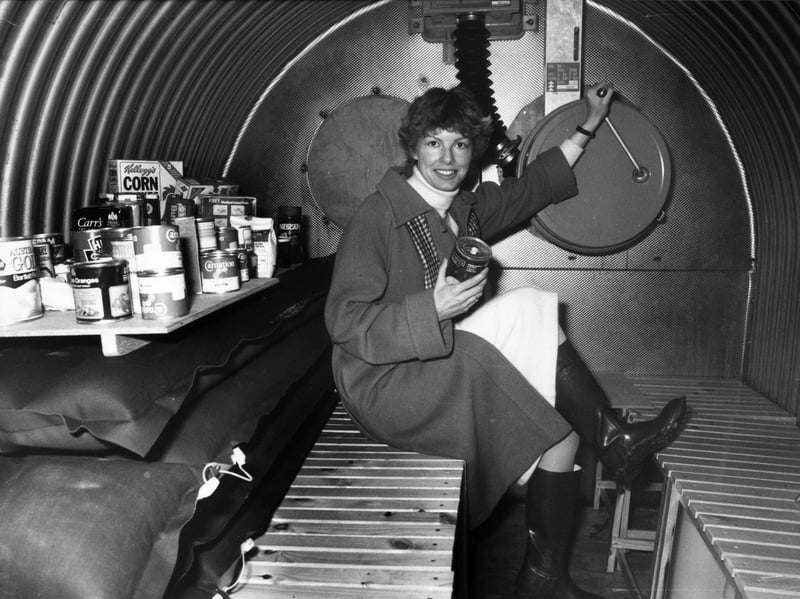
9. Government-approved
A woman in one of the government approved nuclear shelters in York, in January 1981 | Getty Images Photo: Ian Tyas/Keystone

10. Threads
Filming for the BBC TV drama Threads, which depicts a nuclear attack on Sheffield, and its aftermath. The 1984 movie, filmed entirely on location in Sheffield, with many citizens appearing as extras, gave many viewers nightmares. | Sheffield Newspapers Photo: Sheffield Newspapers
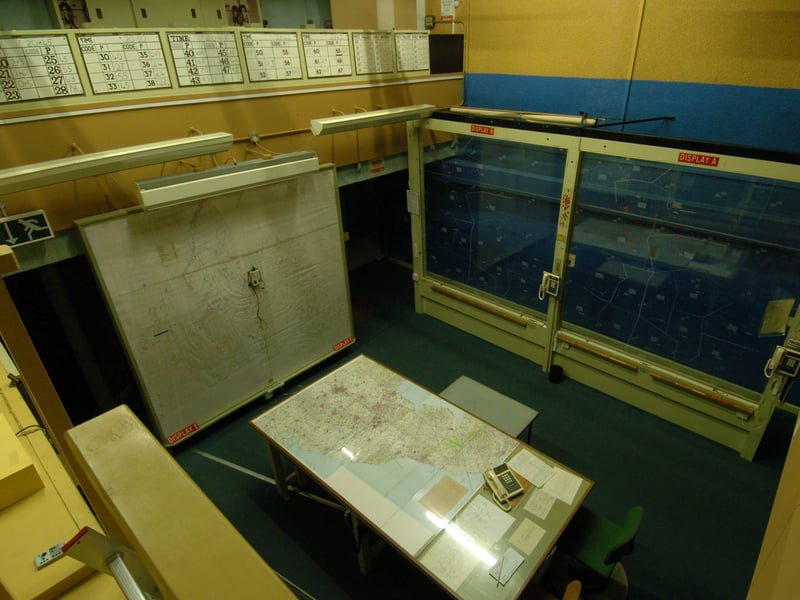
11. Control room
The control room inside the York Cold War Bunker, which closed in 1992 and is now a visitor attraction | National World Photo: Mike Cowling
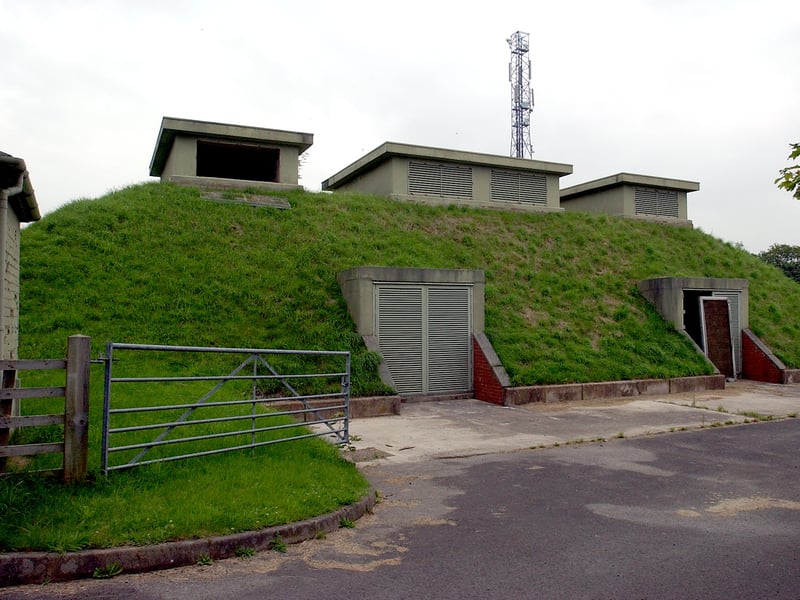
12. Nuclear bunker
An underground nuclear bunker which went up for sale in Goosnargh near Preston, Lancashire, in 2004 | National World Photo: Ian Robinson