
Rich Sheffield families to make up the bulk of Doncaster Sheffield Airport users, aviation guru says

“Are you really serving a business need or are you competing with another airport to nick their passengers?”
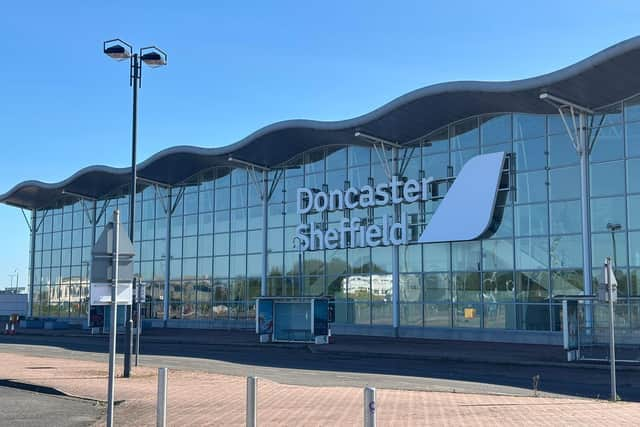
Higher income communities from Sheffield are likely to make up the bulk of Doncaster Sheffield Airport (DSA) users, according to the aviation guru at a UK think tank.
Dr Alex Chapman, who leads work on air transport and tourism for the New Economic Foundation, has said lower income families, often those living close to airports, get less use out of regional airports and are left with the noise and pollution consequences.
He said: “The real totemic example of this is London City Airport, where the people on the planes are a very different people to the ones they’re flying over in South London.


“There’s probably an argument that because of the reduced costs of travelling to the airport it would be cheaper to travel to DSA than to Manchester… But I don’t see that.
“The higher income communities living in Sheffield are likely to be the users.”
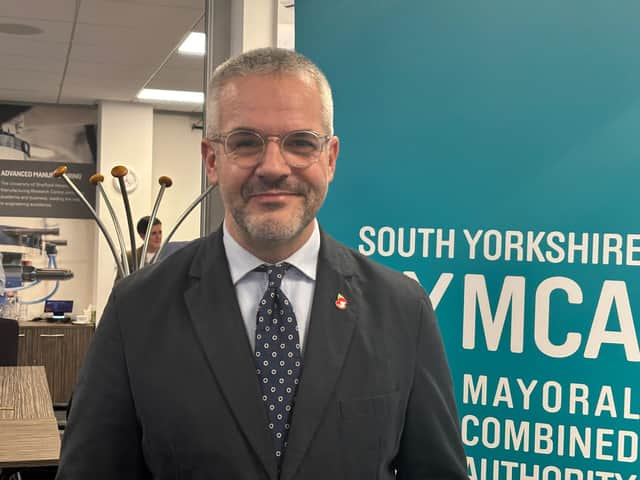
A South Yorkshire Mayoral Combined Authority (SYMCA) spokesperson said: “Re-opening Doncaster Sheffield Airport is a huge economic opportunity for South Yorkshire.
“We’re committed to using the airport as the anchor for the Innovation Quarter at Gateway East and beyond, creating thousands of good jobs, attracting new investment, growing freight and supply chains, and building a world-leading hub for sustainable aviation and advanced manufacturing.
“Getting flights back in the sky goes hand in hand with that wider ambition, connecting South Yorkshire to new opportunities while helping unlock growth across the region.”
Business passengers drive growth from regional airports
Since the City of Doncaster Council and SYMCA embarked on the mission to reopen DSA using public funds, the economic benefits claimed by each authority have largely gone unscrutinised.
Most notably, authorities have suggested DSA will be a ‘catalyst’ for Doncaster’s economy, and the wider economy of South Yorkshire. However, Dr Chapman says case study evidence makes that claim difficult.
He said: “In no way am I here to tell you that there’s no benefit from an airport. But the argument here is that in an already well-connected economy… are you really serving a business need or are you competing with another airport to nick their passengers?
“In our research, the core economic gain comes from the travel of business people. These people forge relationships and create trade, find deals.
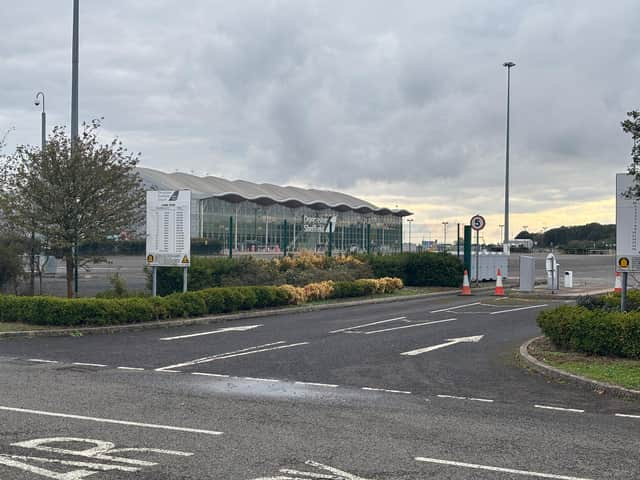
“What you tend to see with airports like Doncaster Sheffield Airport is that the proportion of people that us it for business purposes are very, very low.”
Business travel at regional airports like DSA account for five to 10 per cent ‘at a push’, Dr Chapman said.
However, in 2014 – the last time DSA was included in a Civil Aviation Authority passenger survey – just 2.8 per cent of passengers were travelling for business.
“There’s no real evidence that there’s growing demand for that kind of travel,” Dr Chapman said, citing advances in video-calling and other technologies reducing the need for business travel.
“Most new airports are just taking passengers from other airports. That’s marginal really, as they are still flying,” he said.
‘Strong evidence this is a bad economic choice’
Dr Chapman said there was a ‘missing strategic business need’ to justify reopening DSA.
“Leeds, East Midlands are all relatively close. It’s not the kind of transformative change that will benefit the local economy,” he said.
He pointed to German regional airports, explaining that, in the 1990s, regional German governments invested heavily in local airports, in order to take advantage of what was then a rapidly expanding aviation market.
By 2019, nearly all those regional airports were dependent on subsidies to survive. With German academics concluding: “There is no empirical evidence that the expansion of regional airports translates into regional growth.”
Dr Chapman said: “There is strong evidence that this is a bad economic choice. The only thing they really got from those [German] airports is local people choosing it.”
He also suggested a reopened DSA could take away from local high streets.

“It’s likely that people living in Sheffield might think ‘I have 500 quid surplus this month and I’d like to do something nice with it’,” he said.
“They are thinking about either the holiday in Crete, or buying a new TV on the High Street or going for a fancy meal in a local restaurant,” he added.
Cargo flights unlikely to save the day
Political leaders and advocates for reopening DSA have long suggested the bulk of the airport’s business will be cargo operations.
This assertion has long been used to bat away questions over passenger flights and interest from airlines – who Dr Chapman said are ‘very, very sceptical this goes anywhere’ when discussing DSA with him.
But Dr Chapman says you only need to look at Heathrow Airport, the UK’s busiest airport, to bring that assertion into question.
He explained that in the recent case of Heathrow’s expansion, it was determined that the ‘social welfare impact’ of the airport was ‘determined to be negative’.
“The second thing they concluded was the GDP impact was positive, but by 0.03 to 0.05 per cent of national GDP,” Dr Chapman said – roughly 90 per cent lower than the claimed benefit by planning consultants.
Dr Chapman questioned whether an independent economic review of DSA would have any favourable outcomes at all, considering Heathrow’s claim to economic benefit will be considerably higher than DSA’s.