
Residents 'fear' losing undiscovered Roman history if huge Doncaster solar farm goes ahead

Residents of a small hamlet near Conisbrough in Doncaster fear the loss of future historical discoveries if plans for a large solar farm near their homes go ahead.
The concerns come as a limestone ridge, where part of the Whitestone Solar Farm could eventually be built, receives a national award from Current Archaeology.
Historic records reveal numerous discoveries dating back to the Romans at points along the ridge, which runs as far as Braithwell, Doncaster – where a Roman burial urn, a pit with 22 human skulls and Roman coins were found.
Mandy Kennedy, 63, who lives in Firsby, Doncaster, said: “I think there’s an awful lot of undiscovered things that excite me about the area and one of my biggest fears is that we will never discover what else is there.”
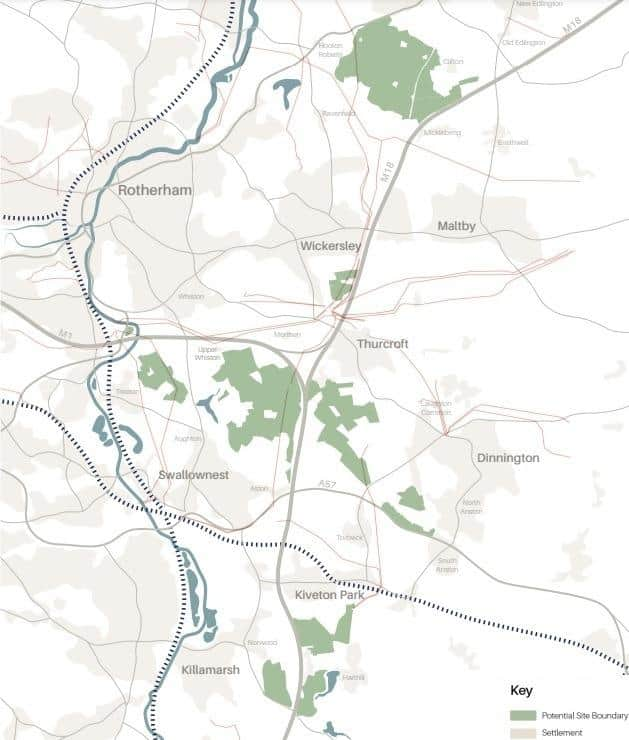

Whitestone Solar Farm will be one of the UK’s largest solar farms if it goes ahead as planned.
The project, deemed a nationally significant infrastructure project (NSIP), will be set across three sites. Whitestone One will be near Conisbrough, with the other two sites in rural Rotherham.
Conisbrough has long been a place of fascination for self-proclaimed “history buffs” like Ms Kennedy, a retired engineer, with Conisbrough Castle at the heart of the town, and a Roman villa beneath the nearby Conisbrough Parks Farm.

Residents of Firsby have said historians believe there is more to be uncovered near Conisbrough.
“My fear is that there’s so much that we know is there and there’s more to be found,” Ms Kennedy said.
“We’re clearly not against environmental investment or clean energy. There’s a place for everything, but it’s just the sheer size of the loss,” she added, “We will all be devastated.”
A spokesperson for the Firsby Residents Association said the area was a “very special place” and added the “heritage of the area” greatly differed the case to other local solar farm projects, such as the recently approved Fenwick Solar Farm.
Developers said the sites had been selected due to their proximity to Brinsworth substation, which would connect the solar farm to the National Grid and avoid high quality agricultural land.
The project is being developed by Green Nation and Net Zero One, who say it would make a significant contribution to national energy goals to reduce energy costs, create energy security and fight against climate change.
“I stand with the residents.”
Opposition to Whitestone Solar Farm has been a unifying subject for a politically divided City of Doncaster Council, with all parties backing a motion objecting to the plans.
That motion was proposed to the council by Conisbrough ward councillor, Rachel Reed, who has been supporting a local ‘Save Our Greenbelt’ campaign since she was elected for Reform UK in May 2025.
Speaking with the Local Democracy Reporting Service (LDRS), Cllr Reed heaped praise on local residents objecting to the plans. She said: “This is what you want – the local community coming together.”

“I stand with the residents. All three [Conisbrough councillors] do. The scale of the development is significant and the impact on the greenbelt will be phenomenal.
“I will always represent the concerns of the residents of Conisbrough objecting to the application.”
Due to Whitestone Solar Farm being an NSIP, the application, being brought by Whitestone Net Zero Ltd, will be assessed and decided by the Department of Energy Security and Net Zero (DESNZ).
The department is headed up by Ed Miliband MP, whose constituency is neighbouring Doncaster North. Mr Miliband, or a delegated minister, will have the final say on whether the project is approved.