
Endometriosis Action Month: Doncaster mum opens up on battle with excruciating condition
“Living with endometriosis is exhausting. I have flares where I’m in so much pain I can’t move out of bed. It is excruciating. I wouldn’t wish this condition on my worst enemy.”
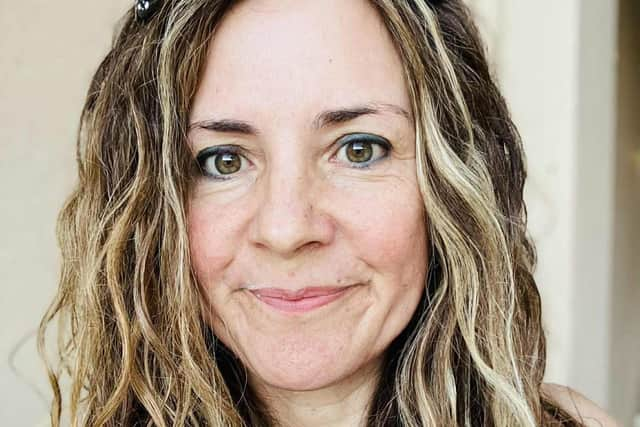
Those are the words of Doncaster mum and Free Press columnist Anita Marsh as she describes the daily battle she faces with endometriosis, the debilitating condition that impacts one in ten women in the UK.
Today (1 March) marks the start of Endometriosis Action Month which aims to raise awareness, improve diagnosis and funding research for the chronic condition.
Endometriosis affects 1 in 10 women and is often a debilitating condition which occurs when tissue similar to the lining of the womb grows elsewhere in the body, causing lesions and in many cases organs to stick together.

Across the UK, the average diagnosis can take several years - and leading charity Endometriosis UK is calling for action to to urge people to contact their local MPs and civic representatives to demand better care and faster diagnosis.
Equestrian columnist Anita has been diagnosed with stage four rectovaginal endometriosis and adenomyosis, and here, in her own words, she describes what it’s like to live with the chronic condition.
“I’ve been living with endometriosis for a number of years, but was more recently diagnosed with adenomyosis in the last three years.
“It took me around seven years to get a formal diagnosis as I was initially in and out of hospital with ruptured ovarian cysts.
"However, once this was given I’ve had good support through my local hospital and consultant.
"The waiting lists are incredibly long though. That’s very frustrating.
“I have been offered a radical hysterectomy and open bowel surgery to remove it but as there is no cure, it can come back.
"The surgery would mean a stoma bag for at least three months with the possibility of it not being reversed.
"I have three horses and for me that’s not an option.
"I have weighed up the odds, given I’m now in my early fifties and I’m hoping to hold out until I go through menopause.
“Menopause won’t make it go away, but the massive influx of oestrogen which feeds it will stop.
"There’s been research now which says the lesions produce their own supply of oestrogen but I’m hoping it will reduce some of my symptoms a little.
“Living with endometriosis is exhausting - team that with adenomyosis and I’m bone-deep tired.
"I have flares where I’m in so much pain I can’t move out of bed.
"I love my horses and the exercise and being around them really helps me.
"I’m gutted when I can’t do this. I never want this condition to define who I am or beat me, but it does floor me.
“I have an endometriona in my left ovary, which makes my ovary very large and distorted.
"I was in hospital last year with an ovarian torsion which they think twisted and untwisted itself.
"The risk is dangerous as it can cut off blood supply. I was heavily drugged to deal with the pain and on a drip, but the hospital was fantastic.
“Adenomyosis is essentially endometriosis but contained in the womb.
"I have it in there, deep and infiltrating. It has made my womb bulky, plus I have fibroids.
"Basically, I can grow anything and everything inside me - but I can’t keep a house plant alive.
“It does affect my life, both personally and with work.
"I have a fabulous workplace, who actively support me and have put in reasonable adjustments to help.
"I’m very grateful for this. I can work from home with flares and I have a set day to do this regardless to cope with the extreme exhaustion.
“Endometriosis isn’t just bad, heavy periods. It’s excruciating pain and inflammation, it can cause painful sex and infertility.
"It can come on any time and it’s predictable in its unpredictably.
"It affects not only your physical health, but your mental health too.
"You never know if you can make plans, you feel like you’re constantly letting people down at work or at home.
"I’ve got a good set of friends now who understand this and I’m very grateful to the support of my family.
“I want our NHS doctors to get better education around diagnosing this.
"Whilst I can’t have hormonal treatment due to a blood clotting disorder, some women can and it might relieve some symptoms.
"We need more research into this condition across the UK and more awareness with employers to support women.
“I have days where I cry, I’m not going to lie.
"I can feel very alone, but I’ve actively started to try and make a difference at work by offering peer support.
"It’s in the very early stages, but it makes me feel less out of control. Like I’m doing something positive.
“I wouldn’t wish this condition on my worst enemy, but I’ve got it and it is what it is.
"I would urge all women to advocate for themselves, go back to your doctor, push for diagnosis and don’t be afraid to share your experiences. We can make a difference and by standing together we can hopefully make it easier for others in the future.”
What is endometriosis?
Endometriosis occurs when cells similar to the ones in the lining of the womb (uterus) are found elsewhere in the body. These cells can grow and change in response to hormones in the menstrual cycle, this can cause inflammation, pain and scar tissue. Endometriosis is most commonly found on the lining of the pelvis (peritoneum) and may occur in the ovaries and involve other pelvic organs, like the bowel or bladder. Less commonly, endometriosis can also be found outside the pelvis, such as in the chest. Endometriosis affects 1 in 10 women and those assigned female at birth from puberty to menopause, although the impact may be felt for life. In the UK, that’s over 1.5 million from all races and ethnicities living with the condition.
Types of endometriosis
There are four different types of endometriosis and it’s possible to have more than one type. The different types refer to the location, amount and depth of endometrial lesions.
Peritoneal (superficial) endometriosis - is found mainly on the pelvic peritoneum – a thin film that lines the inner surface of the pelvis and surrounds the pelvic organs.
Ovarian endometriosis (endometrioma) – is when endometriosis cysts are found in the ovaries.
Deep endometriosis - is found in locations such as the bladder, bowel and recto-vaginal septum (tissue separating the vagina and the rectum). The lesions of endometriosis are at a deeper level than peritoneal (superficial) endometriosis.
Extra-pelvic endometriosis - is when endometriosis is found outside of the pelvis, such as the thorax (chest) and caesarean scars.
A related condition is adenomyosis, where cells similar to the ones in the lining of the womb grow within the muscle of the womb wall. Adenomyosis also responds to the hormones in the menstrual cycle and affects 10% of women and those assigned female at birth. You can have only endometriosis or adenomyosis, although it’s quite common to have both.
Endometriosis symptoms
Symptoms vary from person to person, some may have severe and debilitating symptoms, others may have no symptoms at all.
Symptoms are not always related to the location, amount or the type of endometriosis. It’s also important to know that endometriosis symptoms can also be symptoms of other health conditions. It is recommended that you speak to a doctor if your symptoms are interfering with day-to-day life.
Common symptoms include:
Pelvic pain
Painful periods that interfere with everyday life
Heavy menstrual bleeding
Pain during or after sex
Painful bowel movements/when having a poo
Pain when urinating/peeing
Difficulty getting pregnant – up to 70% of those with endometriosis will be able to get pregnant naturally
Fatigue, with one or more of the above symptoms
Many with endometriosis also experience significant bloating around the time of a period.
However, bloating can also be common for those without endometriosis and bloating that does not go away can be a symptom of other health conditions.
Having endometriosis can significantly impact mental health and wellbeing. With treatment, many of these issues can be addressed, and the symptoms of endometriosis made more manageable.
The main ways to manage and treat endometriosis are, pain management, hormone treatments and surgery. Sometimes it can take time to find a treatment that suits you and response to treatment can vary, please keep speaking to your doctor.
For more details, visit the website Endometriosis UK which can be found HERE
- Anita Marsh is equestrian columnist for the Doncaster Free Press and several other newspaper titles.
- You can follow her at Facebook: In The Saddle - Anita Marsh