
Knife wound caused in Doncaster to London train attack was millimetres from man’s brain, court told
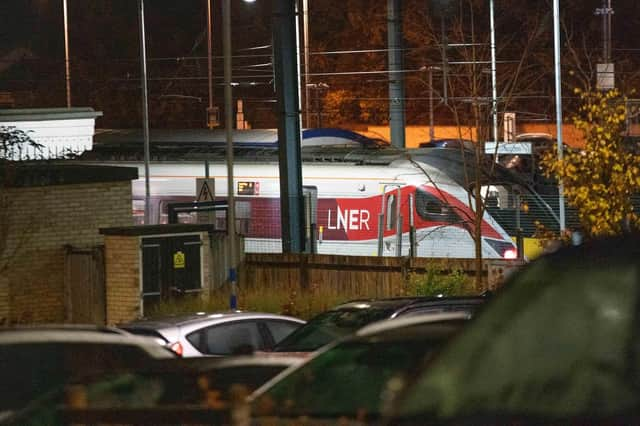
Anthony Williams, 33, denies attempting to murder 10 people on the LNER train between Peterborough and Huntingdon, where it made an unscheduled stop on November 1 last year.
The tip of the blade used by a knifeman to attack 10 people on a London-bound train came “close” to one man’s heart at the time of the stabbing, a court has heard.

Another passenger sustained a knife wound within 0.79cm of his brain, Cambridge Crown Court was told.
Anthony Williams, 33, denies attempting to murder 10 people on the LNER train between Peterborough and Huntingdon, where it made an unscheduled stop on November 1 last year.
He also denies the attempted murders of three people in Peterborough on October 31 and of a 17-year-old boy at Pontoon Dock DLR station in London in the early hours of November 1.
Judge Mr Justice Calver KC earlier told jurors that whether Williams carried out the attacks is not in question, but they must consider whether he intended to kill.
Prosecutor Christopher Paxton KC read jurors a series of facts, agreed between the prosecution and defence, on Monday.
These included details about the knife injuries that had been caused.
Mr Paxton said that one of the passengers, Stephen Crean, aged 61 at the time, sustained a knife wound to the left side of his scalp.
“The wound was within 0.79cm of the brain,” he said.
“No damage was caused to the brain.”
The barrister said that another passenger Sachin Balakrishnan, who was 29 at the time, sustained a knife wound to the left side of his chest “at the level of the heart”.
He said the knife punctured the left lung, causing it to collapse, and “from the entry point of the knife on the skin surface to the left ventricle of Mr Balakrishnan’s heart was 3.59cm”.
“The tip of the blade was close to Mr Balakrishnan’s heart at the time of the stabbing,” Mr Paxton said.
He said that on-board staff member Samir Zitouni, then aged 48, received stab wounds including three to the back, suffered “catastrophic blood loss” and required four blood transfusions.
He said the “clinical impression given to medics at the scene was that he was going to stop breathing”.
He said Mr Zitouni was admitted to intensive care in a “life-threatening condition”.
After the agreed facts were read to jurors, Mr Paxton asked officer in the case Detective Sergeant Nicholas Thompson about Williams’s arrest.
The barrister said: “In terms of Mr Williams’s arrest, upon his arrest did he provide his name to the arresting officers as John Johnson?”
The officer agreed that Williams did this, and also agreed with Mr Paxton that Williams said he had drunk no alcohol when asked the “routine question”.
Jurors were shown images of a bottle of Magnum tonic wine and told that its alcoholic content is 16.5%.
They were told officers had found a smashed bottle of the drink, which Williams was seen on CCTV throwing from the train after the doors opened, on the platform at Huntingdon.
The knife, recovered after Williams dropped it while being arrested by officers with a Taser in a car park at Huntingdon station, was shown to jurors in a plastic tube.
Mr Paxton confirmed with Mr Thompson that Williams had lived “with family” at the time.
After the officer gave evidence on Monday, Mr Paxton told jurors: “That concludes the prosecution’s case.”
Mr Justice Calver told jurors: “There are some legal matters I need to discuss with the advocates.
“I would like you to come back tomorrow at 2pm.”
The trial continues.