
Iconic Doncaster loco Flying Scotsman to take centre stage at huge rail event
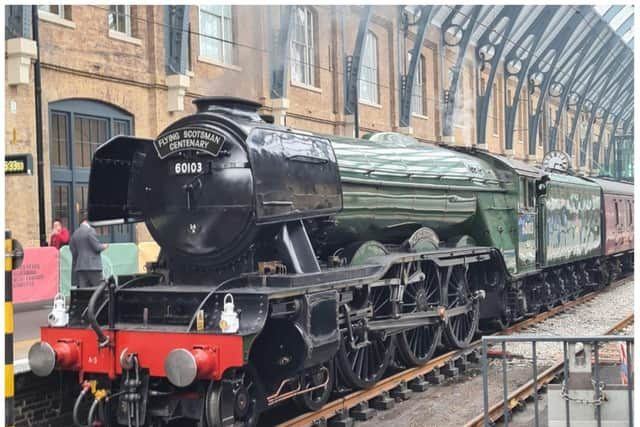
Iconic Doncaster built locomotive Flying Scotsman is to take centre stage at a huge rail event later this year.
Train manufacturer Alstom has announced that the locomotive will be part of the Greatest Gathering event at its factory in Derby.
Up to 30,000 people are expected to attend the event, which runs from August 1-3.
Rob Whyte, managing director at Alstom UK and Ireland, said: “Flying Scotsman’s attendance is a powerful tribute to Britain’s steam legacy and a moment of railway history not to be missed.

“While we proudly honour icons of the past, like Flying Scotsman, we also hope the Greatest Gathering will ignite the imagination of tomorrow’s engineers, as we showcase the latest sustainable and digital rail innovations across our Derby site.”
Craig Bentley, director of the National Railway Museum, which owns Flying Scotsman, said: “Flying Scotsman has captured the public’s imagination for over a century.
“We are proud to be able to share this icon of the track, along with other historically significant locomotives from the national collection, at this landmark event.”
More than 50 rolling stock exhibits from the past, present and future of the railways will be on display, featuring a combination of those powered by steam, diesel and electricity.
This includes the 200-year-old Locomotion No.1, which was the first locomotive to run on the Stockton and Darlington Railway (S&DR) line in north-east England.
The Greatest Gathering forms part of Britain’s wider Railway 200 festivities.
Built in 1923 for the London and North Eastern Railway (LNER) at Doncaster Works to a design of Sir Nigel Gresley, Flying Scotsman was employed on long-distance express passenger trains on the East Coast Main Line.
Retired from British Railways in 1963 after covering 2.08 million miles, Flying Scotsman has been described as the world's most famous steam locomotive.
It set two world records for steam traction, becoming the first locomotive to reach the officially authenticated speed of 100 miles per hour (161 km/h) on 30 November 1934,[1] and setting the longest non-stop run of a steam locomotive of 422 miles (679 km) on 8 August 1989 while on tour in Australia.