
Hair transplant Turkey: What to expect before and after surgery
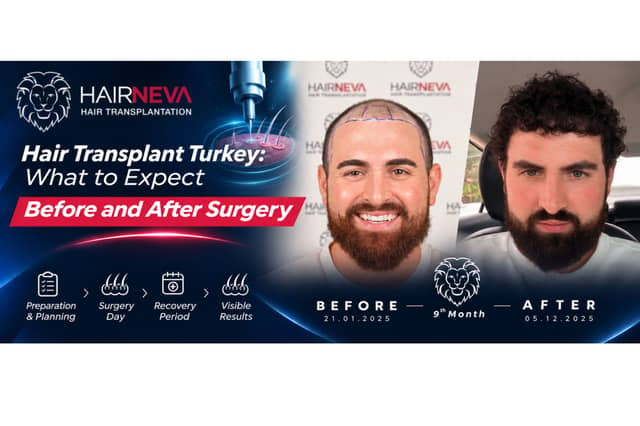

The decision to have a hair transplant often starts quietly: a wider parting, photographs that show more forehead than expected, or a hairstyle that no longer hides a thinning crown. What comes next can feel less straightforward.
Between online consultations, unfamiliar medical terms, and photographs of finished results, it is easy to overlook the months of preparation and recovery involved. For people researching hair transplant Turkey options, knowing what happens before surgery is just as important as understanding what happens afterward. A realistic timeline makes the whole experience easier to navigate.
What does a hair transplant ınvolve?
Hair transplantation relocates follicles from an area with relatively stable growth, usually the back or sides of the scalp, to a region affected by thinning. The follicles are collected and positioned so that new hair can grow in a natural direction. This is surgery involving a limited supply of donor hair, not a treatment that creates an unlimited number of new follicles.
The finished appearance depends on more than the number of grafts. Existing hair, scalp health, hair texture, the shape of the hairline, and the possibility of further loss all affect the plan. A transplant can restore coverage in selected areas, but it does not stop untreated hair elsewhere from thinning.
The first consultation: More than sending photographs
For international visitors, the process often begins with photographs and a conversation from home. Those images can help a clinic understand the areas of concern, but they cannot replace an examination. The medical team needs to assess donor density, scalp condition, hair-loss history, current medicines, and whether surgery is appropriate at all.
This is also the moment to discuss expectations without relying on dramatic before-and-after images. A low, straight hairline may look appealing on a screen but seem unnatural years later. The consultation should explain the likely graft range, possible limitations, the proposed technique, and who will carry out each part of the operation.
Preparing in the weeks before surgery
Preparation is an important part of the hair transplant process. Before traveling, patients should provide an accurate medical history, disclose allergies, list prescription medications and supplements, and inform the medical team about previous procedures or existing health concerns.
Depending on the patient's circumstances, the clinic may request blood tests or additional medical checks before surgery. Patients taking blood-thinning medication should never discontinue it independently. Any medication changes must be discussed with the prescribing clinician and treating medical team.
Smoking, alcohol consumption, and certain medications or supplements may also affect surgical planning and recovery. Patients should follow individualized medical instructions rather than relying on general recommendations found online.
Before traveling, it is useful to confirm the following details:
● The date and location of the in-person medical assessment.
● Which medications and hair-care products should be avoided or continued.
● The recommended recovery period and post-operative appointments.
● Accommodation and airport transfer arrangements.
● Who to contact if a medical concern develops after returning home.
Planning these details in advance can make the treatment journey more organized and reduce unnecessary uncertainty.
HairNeva's approach to planning and patient care
Based in Istanbul, HairNeva presents hair restoration as an individually planned process rather than a standard graft package. Its treatment information covers FUE and DHI techniques, donor-area assessment, digital scalp analysis, and personalized hairline design.
The planning process considers the patient's existing hair characteristics, donor capacity, facial proportions, and long-term restoration goals. Rather than focusing exclusively on graft numbers, the aim is to develop a treatment plan that supports natural-looking results and responsible donor management.
HairNeva also provides services designed to support international patients throughout their visit. Its treatment packages describe pre-operative checks, accommodation arrangements, airport transfers, a post-operative care kit, and one year of follow-up support.
The clinic is located in the same building as Marriott Executive Apartments Istanbul, providing international visitors with convenient access to their accommodation and clinical appointments during their stay.
HairNeva follows a doctor-led approach to treatment planning and hairline design, with procedures performed by its dedicated hair transplant medical team. Patients are encouraged to confirm the responsibilities of each medical professional before surgery so they understand who will perform extraction, recipient site creation, and graft implantation.
Assoc. Prof. Dr. Güncel Öztürk and natural hairline design
HairNeva was founded by Assoc. Prof. Dr. Güncel Öztürk, a specialist in plastic, reconstructive, and aesthetic surgery. He trained at Istanbul University Cerrahpaşa Faculty of Medicine and holds European Board of Plastic, Reconstructive and Aesthetic Surgery accreditation. His professional background also includes training periods at Yale University and the University of Miami. The International Society of Hair Restoration Surgery lists him as an associate member.
At HairNeva, Dr. Öztürk's role is associated with medical oversight and doctor-led frontal hairline design, while hair transplant procedures are performed by the clinic's dedicated medical team.
Natural hairline design requires more than drawing a line across the forehead. Facial proportions, forehead shape, temple angles, existing hair direction, and the patient's age all influence the proposed outline.
A well-planned hairline also considers future hair loss. Leaving sufficient donor capacity and avoiding unnecessarily low or dense designs can help maintain a balanced appearance as the patient gets older.
What happens on the day of a hair transplant?
The day usually begins with another review of the plan. The team confirms the hairline, prepares the scalp, and administers local anesthesia. During FUE, individual follicular units are removed from the donor area. The grafts are then placed in the recipient region, sometimes with an implanter pen used in DHI. The process can take several hours, depending on its extent.
Most patients remain awake, although local anesthesia helps control pain. They may feel pressure, movement, or some discomfort. At the end, the scalp is checked and aftercare instructions are explained. The details matter because what happens at home is part of the treatment, not an optional extra.
Here’s what to expect:
· Before the procedure: Final hairline review and medical checks
· During extraction: Follicles collected from the donor area
· During placement: Grafts positioned in the thinning region
· Before leaving: Before leaving
The first 72 hours after surgery
The first look in the mirror can be surprising. The recipient area may show small red dots or crusts, while the donor region can feel tender or tight. Some swelling is common during the first few days. This early appearance says very little about the final result, and the scalp needs time to settle.
The priority is protecting the grafts. Avoid rubbing, scratching, or picking at the treated areas. Sleep position, washing, and use of prescribed products should follow the team's instructions. Persistent bleeding, worsening pain, fever, or rapidly increasing redness should prompt medical advice rather than waiting for the next routine check-in.
Days four to fourteen: When Healing becomes more visible
As the first week passes, crusts generally begin to loosen and the donor region becomes less uncomfortable. Washing usually becomes easier once the clinic permits gentle contact. It is tempting to speed things up by peeling away scabs, but that can disturb healing skin. The first two weeks are an especially important time to avoid unnecessary contact with grafts.
Many people plan time away from work because redness, shaving, and temporary changes to appearance can be noticeable. Physical exercise, direct sun, tight headwear, and swimming may also need to be limited. Exact restrictions should come from the treating team rather than an assumed date on a calendar.
Why transplanted hair often falls out before ıt grows
A few weeks after surgery, the newly placed hairs may begin to shed. For someone who has just spent time and effort arranging treatment, this can be unsettling. The follicles can remain beneath the scalp while the visible hair shafts fall out. This temporary shedding is part of the usual growth cycle and does not automatically mean the grafts have failed.
New growth often becomes noticeable several months later. Hair can initially appear thin or uneven, then gain length and coverage. The crown may mature more slowly than the hairline, and photographs taken at similar angles and lighting can make progress easier to judge without checking the mirror every day.
Changes to expect:
· First two weeks: Crusting, tenderness, and early healing
· Weeks 2-8: Temporary shedding may occur
· Months 3–4: New hair may start to appear
· Months 6-9: Coverage becomes more noticeable
· Months 10-18: Continued thickening and maturation
Travel arrangements and hair transplant Turkey prices
People comparing hair transplant Turkey prices often find packages that combine treatment with hotels, transfers, or care products. Such arrangements can be convenient, particularly when a patient is visiting Istanbul for the first time. They are not a substitute for understanding the surgical plan or knowing who will perform it.
The return journey deserves careful thought as well. Flying soon after a medical procedure may add risks, especially for patients with other health concerns or long periods of immobility. Travel dates should be discussed with the treating clinician. A good plan also includes access to medical help after the patient has returned to their own country.
Risks, long-term expectations, and follow-up
Hair transplantation is generally performed as a day procedure, but it still carries surgical risks. These can include infection, bleeding, reactions to anesthesia, scarring, poor graft growth, and results that look uneven. There is also the risk of removing too many follicles from the donor area. These possibilities should be explained before consent is given.
The final appearance usually takes many months to develop, and native hair may continue to thin around transplanted follicles. That is why follow-up should address both healing and future hair-loss management. A well-designed procedure respects what the donor region can provide, rather than promising a permanent solution to every form of thinning.
Frequently Asked Questions
Does a hair transplant hurt?
Local anesthesia reduces pain during surgery. Tenderness, tightness, and swelling may occur afterward, and prescribed aftercare can help manage discomfort.
How long should I stay in Turkey?
The appropriate stay depends on medical checks, the procedure, early review, and fitness to travel. Confirm the schedule before booking flights.
Can I wash my hair after surgery?
Yes, but not in the usual way immediately. Follow the clinic's washing schedule and use gentle techniques when advised.
Is shedding after a hair transplant normal?
Yes. Transplanted hairs commonly shed during the first several weeks. New growth usually begins later as follicles enter another growth phase.
When can ı return to work and exercise?
Some patients allow one to two weeks before returning to work. Strenuous exercise may require a longer pause, based on medical guidance.
When will the final hair transplant result be visible?
New growth often starts around months three or four. More complete results may take 10 to 18 months, with variation between individuals.
Will the existing hair continue to thin?
It can. Transplantation does not stop future loss in untreated follicles, which is why long-term planning matters before and after surgery.
Disclaimer: Always consult your GP or NHS consultant before embarking on any private medical or cosmetic treatments. Ensure you have adequate health and travel insurance to cover treatment abroad and check the UK Foreign, Commonwealth & Development Office (FCDO) and the British Association of Aesthetic Plastic Surgeons (BAAPS) for the latest advice The NHS also provides advice on considering cosmetic surgery abroad via the NHS website.