
Does Reform UK or Labour control Doncaster Council? The directly elected mayor system explained

Which party controls the City of Doncaster Council? Is Reform UK in charge, or is Labour? How much power does the elected mayor hold? The Local Democracy Reporting Service explains who the top dog in Doncaster really is.
Reform UK stormed to a council majority in Doncaster in May 2025. On every other authority where Nigel Farage’s party did this, they took control and gained power, but in Donny, power went to five Labour politicians led by an all-powerful Mayor.
The City of Doncaster Council is one of 13 local authorities (not including combined authority mayors – or ‘Metro Mayors’ – like Oliver Coppard, Andy Burnham or Sadiq Khan) to use a directly elected mayor (DEM) system.
DEMs offered a ‘strong leader’ style of local government favoured by Tony Blair and the Labour governments of the late 1990s and early 2000s. In Doncaster, this system has become presidential with the Mayor of Doncaster wielding considerable power over the policy and direction of the council, with very little input needed from the chamber filled with elected councillors.
Does Reform UK control Doncaster Council?
Reform UK took 37 of 55 seats after polls closed in May 2025. A huge majority never seen on the authority for any party other than Labour.
And yet, despite their huge presence, they discovered very quickly that they’d lost the election that mattered most – the race for the Mayor of Doncaster.
General estimates from staff and political figures around the City of Doncaster Council is that the Mayor, and their hand-picked cabinet, make around 95 per cent of the key decisions.


It means that for nearly every single policy issue and decision, the Mayor requires no input at all from the council chamber. In today’s council, Labour Mayor Ros Jones faces no requirement for the Reform UK majority to approve her decisions in nearly all cases.
Revisiting the earlier comparison to a presidential system, the councillors in Doncaster have even less ability to check the power of the Mayor than Congress in the United States of America to the President.
So no, Reform UK does not control Doncaster Council. Despite what the party’s website states.
What is the difference between the Mayor of Doncaster and city councillors?
Although it is held at the same time, the election of the Mayor of Doncaster is separate from the elections for ward councillors to sit in the council chamber – and the Mayor is not a councillor.
The entire borough votes for the Mayor, whilst they will only vote for the councillors nominated for their specific wards.

This means the winner of the mayoral election was elected by the entire city, rather than, say 900 people in Balby South ward.
For example, in 2025, Ros Jones was elected Mayor of Doncaster for Labour with 23,805 votes. Comparatively, the most votes received by a single ward councillor was 2,173 cast for Councillor Bob Anderson in Rossington and Bawtry ward.
Mayor Jones only just secured victory – and with it her fourth consecutive term. A formerly healthy electoral majority was cut to less than one per cent by Reform UK’s candidate, Alexander Jones.
Who gets to be in the Mayor of Doncaster’s cabinet?
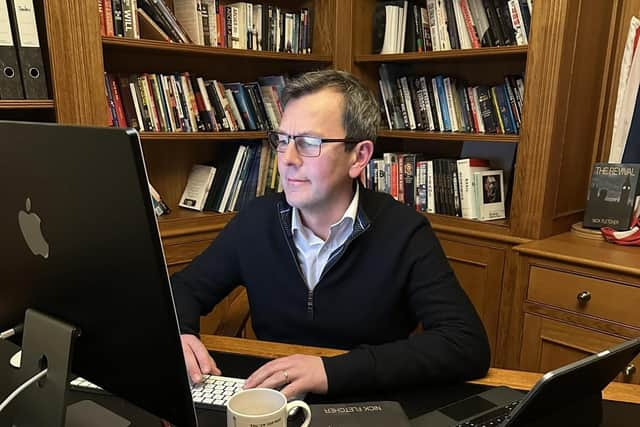
The 2025 Conservative Party candidate for Mayor of Doncaster, the former MP Nick Fletcher, pledged during the election to have cabinet members from all parties, including Reform UK.
Cabinet members must be elected councillors. No outside individuals can be allocated power by the mayor.
This is unlike UK Governments, who can technically appoint new members to the House of Lords and hand them government power – such as David Cameron’s appointment as Foreign Secretary by Rishi Sunak, or businessman James Timpson’s appointment to the Ministry of Justice by Sir Keir Starmer.
Ros Jones did not make the same pledge as Nick Fletcher and despite seeing her pool of Labour councillors fall from over 40 to just 12, she chose four Labour councillors to be in her cabinet.
Doncaster Council’s constitution states it is up to the Mayor to choose who enters cabinet. The majorities and group sizes on the council does not have to be considered at all.
The Mayor of Doncaster and their cabinet makes around 95 per cent of decisions, so for many Mayors of the past (all but one of whom have been Labour) having a cabinet of party colleagues willing to carry out their priorities in their respective council portfolios is important.
Peter Davies, the only non-Labour Mayor of Doncaster since the system was adopted in 2002, was an English Democrat when elected.
His party did not manage to get any elected councillors, so he was forced to fill his cabinet positions with councillors from other parties.
Does Reform UK hold any power in Doncaster at all?
The Reform UK group on the City of Doncaster Council holds no power over policy, nor any statutory influence on the Mayor’s decision making in nearly all areas.
However, Doncaster Council’s constitution gives the elected councillors influence on a very important aspect – the budget.
Every year, in February, the Mayor of Doncaster presents their budget to full council for approval.
Every year since Ros Jones first became Mayor, the council has had a Labour majority and approved her budget.
2026 was the first time a Labour Mayor of Doncaster needed to get another party to approve their budget. Reform UK did not support it in its entirity.
Most of Mayor Jones’ budget went through as planned, including her capital spending plan and housing budgets, but Reform UK forced changes to the revenue budget, which sets the council tax increase for the next year,
The Mayor has proposed the maximum possible increase of 4.99 per cent. However, Reform UK forced through changes, dropping the increase to just two per cent.
In order to pay for the reduced tax increase, the party delayed full pay restoration for council staff, phasing it over two years, amongst other measures.