
Bills to rise to fund discounts for homes near pylons, says Ed Miliband
The cost of reducing energy bills for people who live near pylons will be paid for by increasing average annual bills across the country by 80p, Energy Secretary and Doncaster North MP Ed Miliband has said.
Under the government's plans, households in Great Britain within 500m of new or upgraded pylons will get discounts of up to £2,500 over 10 years, equivalent to £250 a year.
Miliband said the costs of the scheme were "more than offset" by the benefits of the new infrastructure.
He added that the idea was not about buying people off but "recognising the service" they were doing for the whole country.
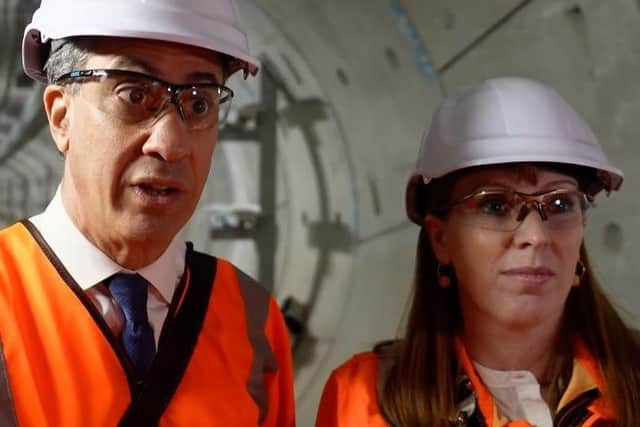

However, rural campaign groups said it was "impossible to put a price on the loss of a landscape".
A government-commissioned report found hundreds of miles of new pylons will be needed to meet its clean energy targets.
But new infrastructure proposals have sparked fierce opposition from residents in parts of the country like Norfolk and Suffolk, with campaigners arguing they will destroy the countryside.
The bill discounts, which will be funded by electricity suppliers, are expected to be in place from 2026.
Suppliers are expected to recoup costs by passing them on to other customers.
Miliband told the BBC: "At the moment, we're having to switch off offshore wind farms because we haven't got the transmission infrastructure.
"So everybody benefits from this. Everybody gets lower bills, and those who live near pylons are given a recognition of what they're doing."
The idea forms part of the government's Planning and Infrastructure Bill, which is due to be published this week.
Alongside money off bills, the government will publish new guidance on how developers should provide benefits to communities hosting transmission infrastructure, by funding projects like sports clubs, educational programmes or leisure facilities.
The idea of giving people living near new pylons money off their energy bills was also proposed under the previous Conservative government.
A government survey in 2024, external suggested 78% of people would find an energy infrastructure project more acceptable if they were offered discounts on their bills.
Some energy companies already offer bill discounts to customers who live near infrastructure like wind turbines, while grants are also available for local communities affected.