
"They shot my entire family": Doncaster boat refugees fleeing genocide speak out
Twenty years ago, a horrific civil war ravaged Sudan – with an estimated 200,000 people killed between 2003 and 2005.
Many of those forced out of their homes and country because of the horrific violence have since setlled and made new lives for themselves in Doncaster.
Here, Dur-e-Sheywaar Ahmed takes a look at the story – and how in the darkest of times, new light has been found.
The evolution of cultural and ethnic diversity has been lost in Sudan; people have been forced out of their homes, massacres have taken place overnight, and entire communities have been wiped out.
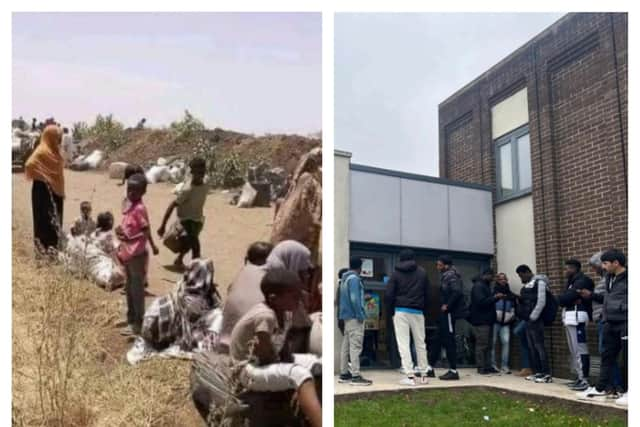

The conflict persists over the following issues - land, resources and overbearing control from politicians to the military alike.
This has led to fighting between the Sudanese Armed Forces (SAF), Sudan's official military, and the Rapid Support Forces (RSF).
A paramilitary group that was formed from the Janjaweed militia, an Arab tribe that committed unspeakable and largely undocumented atrocities against the people of Darfur in 2003.
They were officially known as the RSF in 2013.
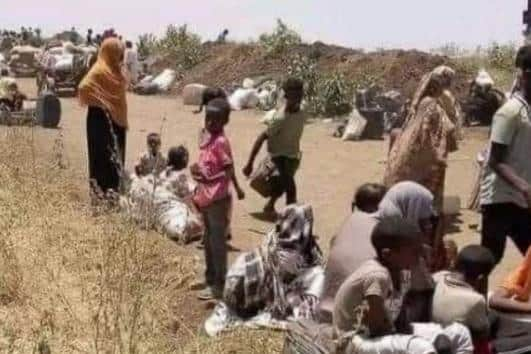
The formation of the RSF has resulted in violence erupting all over Sudan, especially in Darfur.
People are escaping, which has led to the number of Sudanese refugees in the UK to surge, as people can no longer reside in the country they once belonged to.
Now, over 3,000 Sudanese refugees are seeking asylum, a spike in numbers of more than 1,000 since the Darfur Genocide.
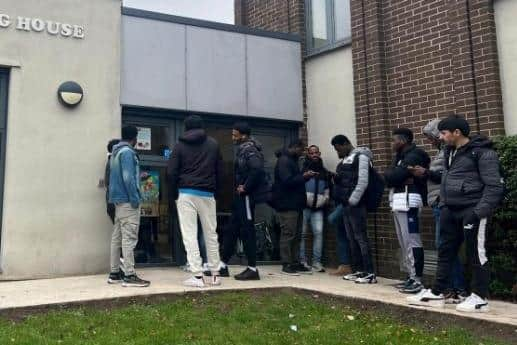
Speaking to the refugees from Darfur and volunteers from the Doncaster Conversation Club alongside Ismail Abdul Rehman, the official representative and spokesperson of the Sudanese refugee and asylum seeker community in Doncaster, it was clear that the Darfur Genocide had led to a refugee crisis that subsists over 20 years later.
Now Sudan holds the record for the largest displacement disaster in the world, with over 10.2 million people left without a home.
The UN confirms that the death toll for the Darfur Genocide crossed over 100,000, but so little is documented that official numbers are unknown.
But to understand Sudan today, you have to understand what Sudan was, and this starts in Darfur.
Darfur, an area rich in agriculture, was decimated by the Janjaweed in 2003-2005; who remain in control of the area today.
They’ve burnt down houses, abducted children, raped women and young girls, forcibly removed Fur people from their homes, and ethnically cleansed an entire population.
All for land, power, and control.
The genocide was a widespread humanitarian alert at the time, where countries opened their borders to allow Darfur refugees in.
‘There was nothing like the Darfur Genocide. It made me a refugee in my own country. '
Ismail Abdul Rehman has spent most of his life escaping his own country.
A lively man from Darfur who witnessed and lived through the horrors the Janjaweed committed in his homeland in 2003, Ismail spoke about the terrifying reality he was forced to live through.
‘When I was five or six, I saw my father and older brothers get shot. The Janjaweed came to my house one day, took our cows and what we had, and then shot my family. It still lives in my face; I’ll never forget it.’
He continues, ‘You can't understand the mental trauma refugees and asylum seekers have; people are traumatised. Even when they reach safely, they are scared to leave their homes in case they get killed. What people need to understand is that who would want to leave their own country if they like it? Truly, something terrible has happened to this person to make them leave’.
‘In my own country, I was a refugee.’
This is why places like the DCC are vital in helping refugees.
Paul Fitpatrick is a volunteer, and retired teacher of over 10 years who visited Sudan and saw the poverty that was rampant in 2018.
‘The price of bread was skyrocketing when I went, but it’s nothing compared to now.
‘There was a shortage of oil, people are starving in Sudan.There is a tax on hospitals and food, the same as in Gaza. This is an international crime’
He has spent a great amount of time with refugees and asylum seekers. He explains how the organisation helps refugees adjust to life in Britain.
‘We help refugees become practically orientated; we help them with filling in important documents such as their BRP, known as their immigration status; we help them apply for a driving licence; deal with queries such as how to get into university; provide health checkups and English classes; we help them understand the law; and deal with the bureaucracy of British life.
"We are also a place to socialise and meet other refugees, as it can be an isolating experience.’
The atmosphere in the DCC was energetic and dynamic; everyone was in solidarity with one another, whether it was helping with the tea and cakes or greeting the volunteers.
Abdul Omar, a Sudanese refugee who was imprisoned in Malta for illegal immigration whilst escaping persecution and then reached the UK via the back of a truck, opened up about what the DCC meant for him: ‘We’ve never seen something like this; they give you a place to stay and food. Whatever we want, they help us.
"This is where I find my solutions. Without this place, we would be lost; without the people here to open our minds, I don’t know what we would do.
“The people here, they love us for real. I can't appreciate my whole life for what they have done for me.”
Many people from Darfur have had to live in camps their whole lives.
‘While we were living in camps in Darfur, people would go missing and no one knew why. Every couple of days, I would lose friends who would go to get water. Once, they caught three of my
friends, and I started running and managed to escape. It was after that, when I got home and told my mother, I had to leave my country or they would have killed me.They had seen my face now, and too many young boys were disappearing.’
Ismail spoke about the Janjaweed slowly seizing every facet of Sudan and leaving the country to bleed.
‘The issue was nobody spoke about Darfur; we didn’t have social media to show the world what was happening. Even people in Sudan didn’t believe what was happening in Darfur, in Khartoum, and the big cities. They didn’t think that the Janjaweed would end up with so much power, and now they have control over the whole country. They have more power, control, and influence than the Sudanese government.’
He continues, ‘I saw a video on social media of 300 young men who were murdered, and it was filmed and posted. I remember crying, disappointed in what is happening in my country.’
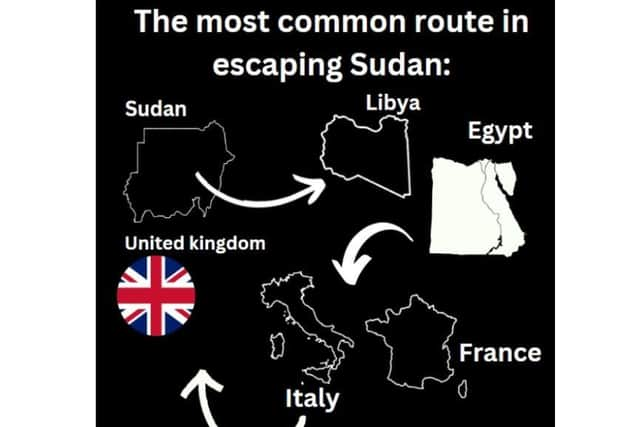
From Sudan to Libya, Italy, France, and finally the UK, Ismail's journey has been full of danger, but to Ismail, it was about survival. This is the reality of refugees fleeing from acts of terror in Sudan every single day.
Ismail explained how challenging it was on his journey from France to the UK. ‘When it came to running to the station to get in the back of a cargo train to escape, I remember we would all run in groups so that the police who would be nearby would catch some of us, so the others could escape. Only 2 out of 200 of us managed to escape.’
But the journey by boat was far more terrifying. These routes are gruelling and taxing and likely end in death, these boats are made out of metal scraps and not made to hold the amount of people that are travelling in them. In February 2024, 13 out of 42 asylum seekers died in the sea on their way to Europe, 27 of those are missing. Only two people survived.
‘On my journey from Libya to Europe, I was on a small boat with 170 people on it. You have to pay a fee to even get on this boat, around £1000, and they don’t tell you it’s a small boat. Once you’re there, you cannot leave; the people who are making you go on have guns. There’s no return. We were scrunched together, holding our knees for 24 hours.
Until an international rescue team finally found them. ‘We didn’t eat or drink; the only thing you focus on is your life; the feeling is horrible, but nothing compared to what is happening in Sudan.’
Ismail expressed how that experience shaped him: ‘People have a very negative look at refugees, but I am proud, I know what I have lived through to be here today. The Sudanese community helped me so much, throughout my journey. Once I finish my health and social care degree, I want to go into working with refugees and asylum seekers in healthcare.’
‘I am proud that I was a refugee. Other people look at it as shame; people look at you differently.
‘But I am proud. I know what I have lived through and what I have gone through to be here today.’
Other refugees from the DCC spoke about the dangerous journeys they followed to arrive in the UK.
Farah Aldil, a Sudanese asylum seeker volunteering at the DCC, spoke about his experience.
‘The journey from Libya to Italy is a harsh one. People die on those boats every day.
"They can very easily tip. It wasn’t easy to cross the border. We were 100 people on one boat for twenty four hours, until we received help. It was horrifying.’
Over recent years, the UK Home Office has punished those fleeing persecution by sending them back to such violent, torturous conditions, such as the Rwanda policy.
Life for refugees and asylum seekers is becoming more and more intolerable, as evidenced by the riots in the summer.
A hotel in Rotherham housing refugees was attacked in August this year, with many refugee and asylum seekers fearing for their lives.
‘I want them to tell us, where should we go? Think about what we are risking, how many miles we are walking, we escape death for them to send us back.
"In WW2, the Jews needed a home.
“This can be anyone. I don't want to run from my country but I have to. How can they send us back?’ Farah expressed his frustration at the UK’s harsher immigration policies.
Paul commented, ‘What people don’t understand is that the boats are a tiny percentage of refugees, yet the focus is on demonising them, presenting them as invaders, and illegalising them.
"Theresa May herself said to create a hostile environment and push them out, which has entered people's consciousness and resulted in such a negative stigma towards them.’
Ismail explored different ways of helping refugees, criticising the notion to place them in hotels.
‘They say refugees take their jobs, but I help them find jobs. When you end up in this country, they put you in a hotel. There are big families living in hotel rooms. It’s not practical and doesn’t help them or make the transition to the UK easier.
"People are cooped up in hotels, with nothing that belongs to them. It has real mental effects. If you ask refugees in hotels if they want to be in a different place, they will tell you they want to work.’
What the people of Darfur have lived through lives inside them on a daily basis.
They speak fondly of what their life entailed before the Janjaweed came and made them homeless.
Farah expressed, ‘Even though I'm safe now, I lost something. When I close my eyes, I think of a time when I played football with my friends, I think of the valleys, the mountains, and going to
school. All destroyed. I think of my country's future, and it scares me. I don’t think I’ll ever be able to return home.’
What was the Darfur genocide?
The Darfur genocide was the systematic killing of ethnic Darfuri people during the War in Darfur. The genocide, which was carried out against the Fur, Masalit and Zaghawa ethnic groups, led the International Criminal Court (ICC) to indict several people for crimes against humanity, rape, forced transfer and torture. An estimated 200,000 people were killed between 2003 and 2005.[1