
Private Eye magazine takes up plight of demolished Grade II listed building in Doncaster
Crusading current affairs magazine Private Eye has taken up the plight of a historic Grade II listed building controversially demolished in Doncaster.
The timber-framed building, which is believed to date from 1570, had been a landmark in Stainforth for centuries, situated in the heart of the village.
But the building suffered a devastating fire in December 2021 and the remains of the building have since been torn down.
Historian Professor Paul Buckland has been pressing City of Doncaster Council’s planning department over the matter and has urged South Yorkshire Police to get involved.
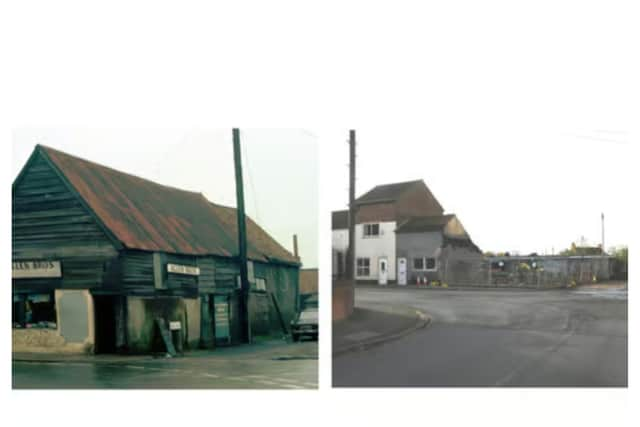

Now the magazine, edited by Have I Got News For You panellist Ian Hislop, has reported on the case in its Nooks and Corner section, which features cases of architectural “vandalism.”
The current issue reported: “When a 400-year-old timber building is demolished and replaced with a breeze block workshop, without any kind of listed building consent or process, there's usually a hullaballoo from planners and conservation officers.
"They might even demand the building be completely rebuilt.
“Not so in Doncaster, where the council itself carried out such a demolition last year, after receiving a "dangerous structures notice" from the owner requesting it. It is now waiting for the owner to submit a retrospective planning application for the horrid replacement.”
The report added: “After the building was suddenly destroyed last November, Dr Buckland was told by the council that it "was in a dangerous and unpredictable condition poising [sic] a danger and potentially an imminent threat to public safety". They insisted reasonable repair to the fabric wasn't possible and the decision to demolish wasn't taken lightly.
The magazine added: “Historic England was not notified of the demolition, let alone consulted. No archaeological survey was ordered, which is usually a condition of listed building consent if a building was judged to be beyond repair.
“The building has already been replaced. When asked what it is doing about this, the planning department explained, er: "The team are currently undertaking regular visits with follow up consultations to re-assess the status quo and subsequent planning balance to determine if material planning harm is in occurrence" and the owner's representative had promised a retrospective planning application soon.
"It is a criminal offence to do unauthorised work to a listed building even if it is a building which has suffered damage by accident," said Liz Fuller, buildings at risk officer for SAVE Britain's Heritage. "The complete demolition of a listed building of any age, but particularly from as early as the 17th century, is tragic. This sets a terrible precedent."
In a letter last year, Prof Buckland wrote: “It had stood for 500 years and the oak frame remained in good condition. It deserved to be curated.
"The site was cleared completely without due regard to its importance or any consultation.
“I trust that the local authority will take suitable action against the perpetrators of this act of vandalism, the complete destruction of a structurally sound listed building.”
In response, Doncaster Council told him: “Unfortunately, after very careful and detailed consideration of all the circumstances, the Council concluded in response to a Dangerous Structures Notice served by the owners that the building was in a dangerous and unpredictable condition poising a danger and potentially an imminent threat to public safety.
"The condition of the building was considered to have gone beyond a state where reasonable repair to the fabric could be undertaken as a feasible option.
“I can confirm to you the decision to accept the notice was not taken lightly, but the Council having regard to all its various statutory duties had to make a balanced judgement.”
“The building, because of the fire damage, had not enjoyed a viable or beneficial use for a number of years and clearly had continued to deteriorate with ongoing movement associated with a number of areas of the building clearly evident at the time of inspection by the Council.”
The Grade II listed structure at the junction of Water Lane and Hall Road had been falling into further disrepair following the blaze.
Professor Buckland said: “A 1977 survey recommended that the building not only be listed but also preserved.
"Its importance lies as much in the fact that it was the last evident timber-framed building on the levels as that it had stood probably for 500 years with no problems.”
First listed in 1987, the building has had a variety of uses over the years.
Its Historic England listing states: “The timber-framed building on Hall Road is designated at Grade II for the following principal reasons.
"It is an impressive, late-C17 timber-framed building that contains a significant proportion of its original fabric.
"The building is a rare survival of this building type in the area. Despite recent losses of timber-framing concentrated in the west bay, which has lost its roof structure, the layout and construction of the 3-bay building remains clearly visible.”
Professor Buckland added: “The sequence, arson, demolition and construction without planning permission perhaps merits police investigation."