
D-Day 80: Doncaster veteran, 104, shares memories on WW2 anniversary
One of Doncaster’s last remaining veterans of D-Day has shared his wartime memories to mark the 80th anniversary of the Normandy landings which changed the course of World War Two.
Today is the 80th anniversary of the huge sea, air and land invasion of northern France which began on June 6, 1944 and saw thousands of Allied troops storm the beaches, turning the tide of the conflict against Nazi Germany.
Among them was Fred Adamson, now 104, who served with the 1st/4th Battalion Kings Own Yorkshire Light Infantry.
While he is unable to attend any events to mark the anniversary, his grandson Philip Knight says Mr Adamson will be remembering his comrades today, with wreaths laid in Normandy and Conisbrough on his behalf.
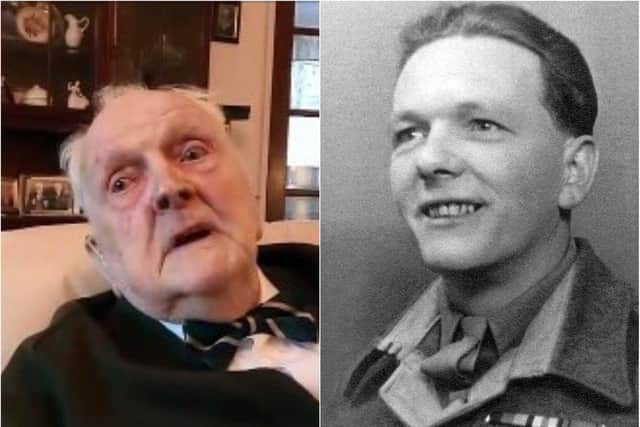

Major David Jarratt from the KOYLI Regimental Association will visiting Normandy to place a wreath while Mr Knight will lay one at Conisbrough war memorial.
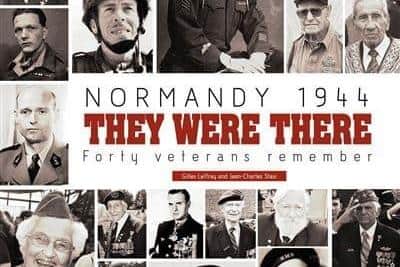
He is also due to feature in a newly-released book, “Normandy 1944 - They Were There - Forty Veterans Remember,” by author Gilles Leffray.
Mr Adamson celebrated his 104th birthday last November and in 2022 was given a civic reception in France – more than 75 years on from World War Two.
Fred, who hails from Conisbrough, had a number of narrow escapes during his time fighting during the war – and was honoured with a civic reception in the town of Fontenay-Le-Pesnel with signs lit up in his honour in recognition of his and his comrades work in the liberation of France.
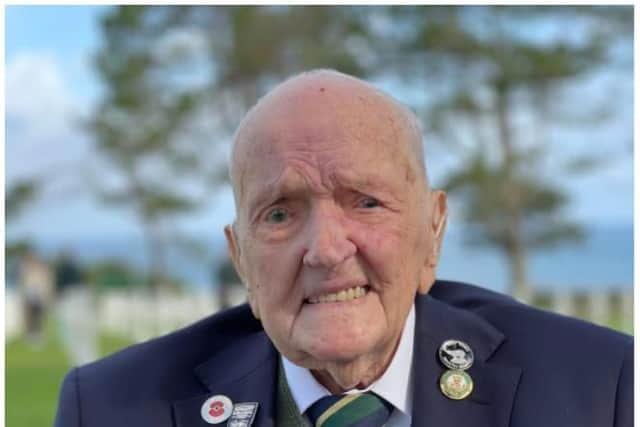
He landed on the Normandy beaches four days after D-Day and was involved in furious fighting, taking part in the Battle of Normandy in what became know as the "Battle of the Bocage" – the battle of the hedgerows.
Said Fred: “Our Battalion landed in Normandy on Gold beach on 10 June 1944.
"When we left the assault craft, most of us had to wade in the sea at waist height – in my case, as I am only 5 feet 2 inches, it was almost up to my neck – to reach the beach.
"It was all rather frightening not knowing what we were going to encounter, but by this time the beaches had been cleared of the enemy and there was only gunfire here and there.
"A few days later, after marching inland we made our first contact with the Germans when we entered a copse and found the enemy facing in at the other side and only about 40 metres away, our first real experience of enemy fire.
“Our first major operation on 16 June 1944 was to take part in the attack on Cristot.
"During and following the attack, eight of our Battalion were killed, including five from my Company, 'A' Company and 30 or so wounded.
He nearly lost his life in October 1944 – but was saved because he was a smoker.

Explained Fred: "I was wounded on 9 October 1944 at Poppel on the Belgium side of the Dutch border when I was hit by shrapnel.
He added: “I knew I’d been hit as my leg was blooded but it wasn't until I was at the field hospital, when I was given some cigarettes that I realised what had happened.
“As I went to put them in my cases, I realised my two cigarette cases had saved my life.
"The shrapnel went through the top of first, clipped each page of his army pay book and then dinted the second case.
The retired wages clerk, who was born in Kimberworth, moved to Conisbrough in 1925, when he was a six year old.
After going to Morley Place school, Fred won a scholarship to Mexborough Secondary School, as it was then called, later known as Mexborough Grammar School.
Leaving school, he got a job for the Amalgamated Denaby Collieries – the company running the pits at Denaby, Dinnington, Rossington, Maltby and Cadeby – as a wages clerk.
But his life changed when he was called up by the army on February 15, 1940, and put into the 1/4 battalion, KOYLI.
After suffering his injury, Fred was sent back to Britain, and married his wife, Elsie Robinson, in January 1945. Elsie died several years ago.
After the war ended, he was posted to Italy, before being allowed to leave in 1946.
He returned to his job in Conisbrough, and joined the newly nationalised British Coal in 1947. He went on to become head wages clerk, and then went onto be assistant industrial relations officer, before retiring in 1984, aged 65.