
Investigation into healthcare provided to Doncaster-London train knifeman
He has been found guilty of 14 counts of attempted murder
An independent investigation into the healthcare provided to Doncaster-London train stabbing knifeman Anthony Williams will be commissioned by NHS England, the service said.
The trial of Williams, who was found guilty at Cambridge Crown Court of 14 counts of attempted murder, was told that he was suffering from an acute psychosis as a result of his schizophrenia at the time of the attacks.
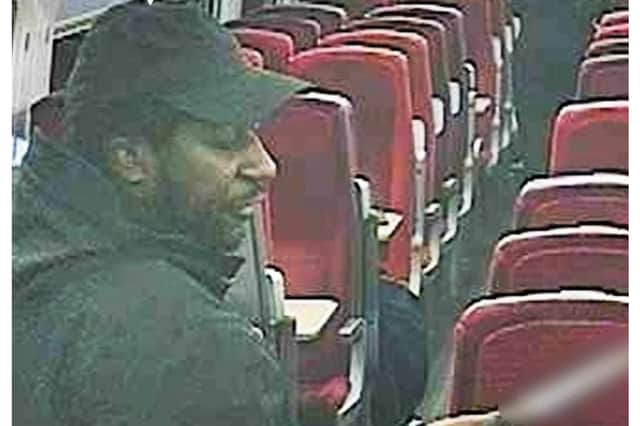

NHS England said the findings of an investigation would be shared across the NHS and healthcare partners and will include “any measures that could be put in place to help improve patient safety across the NHS and potentially reduce the risk of terrible attacks like this happening again”.
Black Friday deal: Buy a full year’s Doncaster Free Press digital subscription for just £12 - click here
It comes as a campaigner warned that mental health patients who are dangerous when unwell need daily monitoring to help protect the public from incidents like the Huntingdon train stabbing.
A spokesperson for NHS England – East of England said: “Our thoughts are with all those affected by this awful incident and we pay tribute to the NHS staff who helped save the lives of those who were brutally injured.
“As with all such incidents, NHS England will commission an independent investigation into the healthcare provided to the service user across all relevant NHS organisations to help identify any opportunities for learning and improvement.
“The findings will be shared across the NHS and our healthcare partners, which will include any measures that could be put in place to help improve patient safety across the NHS and potentially reduce the risk of terrible attacks like this happening again.”
Julian Hendy, from the charity Hundred Families, said cases where patients fall through the cracks and become acutely ill are “depressingly familiar”.
He told the Press Association: “Most of these cases happen when people are either unable or unwilling to go and get the treatment they need.
“This is all too avoidable.
“Most people with mental illness are not violent but a small number of people are dangerous when unwell. They need to have assertive care and treatment.”
Anthony Williams’s trial heard that he was in the grip of a psychotic episode when he stabbed 14 people, 10 of whom were attacked on an LNER train from Doncaster to London on November 1 last year.
He had contacted his GP on September 30 through an online platform “highlighting his deteriorating mental state” and asking for his medication to be changed because it was not working, with the doctor establishing he was on half the dose he should have been.
The doctor invited him to a meeting two weeks later via letter but received no response, and Williams contacted the GP again on October 23 “reporting his deteriorating mental state”.
However, he did not respond to the GP calling back and he was offered an appointment on November 5 – four days after the train mass stabbing.
Mr Hendy believes that lessons fail to be learned from cases where people with mental health issues commit acts of violence.
He said: “I don’t think services are learning the lessons from these tragedies as the same recommendations keep on appearing in inquiry reports but nothing ever seems to change.
“So innocent people continue to become victims of violence unnecessarily. This violence and these killings have to stop.”
Mr Hendy said there are currently only a handful of assertive outreach teams across the country that see patients daily and can help with housing and drug issues as well as mental health care.
Other community mental health teams only see patients either once per week or once per month, Mr Hendy said.
Hundred Families wants to see an assertive outreach team in every local health authority in the country and for the number of psychiatric beds to be doubled.
Mr Hendy believes lack of money is not the only issue.
He said: “It’s not just about money, it’s about attitude and culture within the system.
“More money would help, but there needs to be a recognition that people can be violent when unwell. It’s not a stigma to discuss that.”
There is also the option for patients who will not or cannot take tablets to have slow-release injected anti-psychotic medication that lasts longer.
The Nottingham Inquiry into murders carried out by Valdo Calocane heard the killer was offered such medication but refused it because of a fear of needles.
He killed two 19-year-old students, Barnaby Webber and Grace O’Malley-Kumar, and 65-year-old caretaker Ian Coates in the city in June 2023.
Hundred Families supports relatives who have a loved one killed by someone with a mental health condition.
Mr Hendy’s father Philip, 67, was fatally stabbed by a man with psychosis in Bristol in 2007 and three years later he founded the charity to help others and research the issue.