
Marr Solar Farm refused planning permission, developer confirms it will appeal Doncaster Council decision

Plans to build a solar farm on a 77-hectare green belt site in Doncaster have been refused by local councillors.
Members of the public in attendance broke into a round of applause when the Marr Solar Farm was unanimously rejected by the City of Doncaster Council’s planning committee on Tuesday afternoon.
Following two hours of statements, questions and debates, members of the committee concluded the perceived benefits of building the farm on green belt land did not “clearly outweigh” the harms, despite that being the conclusion of planning officers who recommended approval.
Enviromena, the applicants, confirmed to the Local Democracy Reporting Service (LDRS) following the meeting that it will be lodging an appeal.
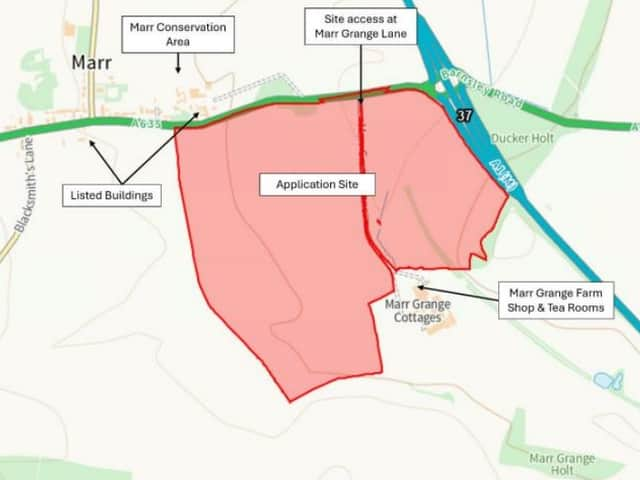

Marr Solar Farm received over 1,270 representations, which Nick Ballinger, who spoke before the committee, said were all objections.
Mr Ballinger told members the site has grown potatoes, wheat and barley. He said the wheat grown on site could create 1.2million loaves of bread.
Pamela Moorhouse, a Marr Parish Council member, told the committee it would be eight years before planting would offer any concealment of the site, which would be a detrimental to the character of the rural village.
City of Doncaster Councillors Cynthia Ransome, Oliver Bloor and Rachel Reed all spoke against the proposals in the meeting.
Cllr Ransome told members the plans would be a significant harm to the family-run Marr Grange Farm Shop and Tea Rooms. Ransome later declared her brother is employed at the site, but she personally had no financial interest in it.
“It employs 30+ local people, plus family members,” she said.
“It will have a detrimental effect on the customers visiting Marr Grange… Customers are as horrified by the proposals as residents and many are here today,” Ransome added, stating the business attracts 2,000 customers every week.
Cllr Bloor, who represents the ward in which Marr falls with Ransome, said local residents feel the village has already made a significant contribution to green energy infrastructure.
Lee Adams, chief operating officer at Enviromena, told the committee the site could deliver £6.5m in business rates directly to the council during its 40-year life.
“The Committee’s decision is not supported by the evidence, and we will now move forward with an appeal.”
However, councillors repeatedly referred to a recent council motion opposing the development of solar farms on green belt land.
Members unanimously agreed to refuse planning permission for the application. They said they disagreed with the verdict of planning officers that the benefits of the development outweigh the harms to the green belt land and nearby community.
Enviromena confirmed to the LDRS in a statement that it would be appealing to the planning inspectorate over the decision.
Mark Harding, chief development officer at Enviromena, said: “We are extremely disappointed that councillors have gone against the professional assessment of their own officers, who recommended this scheme for approval even after revising their designation view.
“Marr Solar Farm is a responsible, policy-compliant project that will contribute to the urgent need to deliver clean energy to meet the UK’s transition to net zero.
“In addition to delivery of renewable energy the project will also bring crucial biodiversity gains and socio-economic benefits both at national and local level. The Committee’s decision is not supported by the evidence, and we will now move forward with an appeal.”
Ahead of the meeting, council papers showed that planning officers had amended their view on the sites designation as grey belt to green belt, but said the adjustment did not change their recommendation to approve the solar farm.
The grey belt, a term introduced by the Labour government, are deemed to be less valuable parts, or “poor quality and ugly areas”, of protected green belt, which can be built on.
Enviromena informed the LDRS it had recently won an appeal in very similar circumstances elsewhere in the country, with the planning inspectorate overturning a refusal by councillors and confirmed the land in question should be grey belt.
Chris Marsh, CEO of Enviromena, commented: “We maintain that the correct designation for this land is grey belt, and the planning evidence clearly supports that position. Even after the officer’s late-stage reclassification, the professional conclusion was that Marr Solar Farm met policy requirements and should be approved.
“With the urgent need for clean, reliable energy, decisions must be rooted in evidence and established policy. We are confident that an appeal will reaffirm the strong merits of this scheme.”
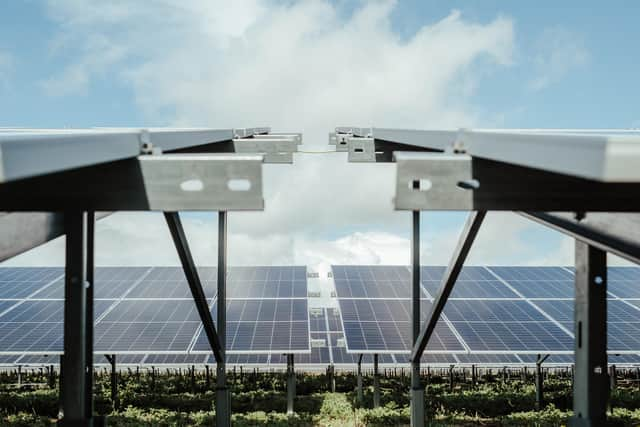
The plans for Marr Solar Farm would cover 77 hectares of agricultural land, providing low carbon electricity to the national grid for 40 years – after which, the farm “would be decommissioned, and the land restored to its previous condition”. It would include 13 transformers on site and two substations.