
South Yorkshire saw the ninth-highest number of rescues involving obese people in the UK
South Yorkshire Fire and Rescue Service responded to 545 call-outs involving obese people between 2020 and 2025, the ninth highest in the UK.
The number of incidents rose by 59 per cent from 58 in 2020 to 92 in 2024. The local fire service spent 32,068 minutes on the bariatric incidents, equivalent to 22.3 days spent on scene in total since 2020.
A representative from South Yorkshire Fire and Rescue Service comments on the rise in bariatric calls: “Increased obesity rates and an aging population are a key factor whilst increased partnership working with other blue light partners, primarily the ambulance service, has also caused the number of calls to rise.”
Previous FOI disclosures showed that in the five years between 2007/2008 and 2011/2012, fire crews were called to more than 2,700 incidents to assist bariatric patients.
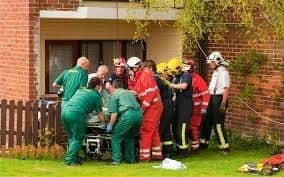

Meanwhile, ZAVA’s latest analysis has revealed that over a similar period between 2020 and 2025, UK fire and rescue services attended 15,849 bariatric incidents, representing a near five-fold increase compared to the earlier period (+487 per cent).
From 2020 to 2024, there has been a +76 per cent increase in incidents involving bariatric patients, rising from 1,804 incidents in 2020 to 3,183 in 2024. From 2020 to October 2025, there have been a total of 15,849 bariatric rescues, which is equivalent to one bariatric rescue every 3 hours and 20 minutes.
As obesity levels continue to rise, rescues are becoming slower, riskier and more complex. Overall, UK fire and rescue services have spent 553,609 minutes at bariatric "special service calls", equivalent to more than a full year of continuous time assisting obese patients (384.5 days) since 2020.
London Fire Brigade responded to the highest number of bariatric incidents between 2020 and 2025 (2,025), costing the service an estimated £1,033,295 in resources. The number of incidents increased by 259% from 134 incidents in 2020 to 481 in 2024. Overall, bariatric rescue incidents were largely concentrated in Croydon (195), followed by Greenwich (151) and Bromley (140).
Of the 2,677 bariatric incidents that the London Fire Brigade have responded to between 2009 and 2025, a disproportionate 76% of call-outs have occurred since 2020, indicating a sharp escalation in recent years. Of all bariatric incidents since 2020, almost four in five calls involved assisting ambulances (79%) with the transport and extrication of overweight patients (1,606).
Firefighter Tom, aged 30, shared their experience with bariatric rescues, including a 10-hour rescue: “A single bariatric rescue required five fire engines, multiple Fire Rescue Units, USAR prime movers, a command unit, senior officers, police, four ambulances, a specialist bariatric ambulance, and a London Ambulance Service Incident Response Unit. This was an enormous mobilisation for a single patient.
“We were on scene for around ten hours. We had to remove a ground-floor balcony, take out three French doors, build a ramp capable of supporting his weight, and set up a line system to lower him down the verge to the road gently. These rescues are rarely just about lifting. They often involve removing windows, doors, balconies, or working at height, all of which increase risk and duration.
“It took nine firefighters just to lift him from the chair onto an upright stretcher. Normally, you’d take a limb each, but he was so heavy that extra hands were needed. One of my crew members injured his back during this job. These incidents routinely push firefighters beyond safe manual handling limits.”
“The sheer number of resources tied up on this job (fire, ambulance, and police) reduced emergency cover across London and likely came at a huge cost to the taxpayer. It involved a 45-minute blue-light run, a ten-hour operation on scene, and a long drive back to base afterwards. That’s a lot of risk and resource for one patient.”
He continued: “Bariatric casualties fundamentally change the complexity of a rescue. What would normally be a simple lift becomes a high-risk operation requiring structured systems of work, rope and line operations, and significantly more time. The greatest immediate risk is the strain placed on firefighters’ backs. Jobs that would be straightforward with a casualty of a healthier weight become physically damaging and exhausting.”
More than six in ten adults in England are estimated to be overweight or living with obesity (64.5%). But UK obesity rates could begin to fall with an increase in uptake of weight loss injections, which were estimated to be taken by 1.6 million adults in the past year in England, Wales and Scotland.2 ZAVA’s study shows that UK fire and rescue services attended 13% fewer bariatric incidents between 2022 and 2024, which could be linked to the introduction of weight loss injections in the UK in 2023.
Crystal Wyllie, doctor at ZAVA, said: “Obesity is an epidemic across the world, but within the UK, we can see a natural impact that bariatric care has not only on the NHS, but also on other public services such as fire and rescue services.
“First responders have to deal with a tremendous amount of stress on a day-to-day basis, but adding difficult callouts for bariatric patients risks their health and safety when manual handling pushes the physical limits of responders.
“So tackling obesity is key here to reduce strain on our public services. This decrease in bariatric incidents is a light at the end of the tunnel, and with the millions of Brits choosing weight loss management techniques, including weight loss injections, we can expect to see a further decrease in these risky rescues in the years to come.”