
Fire crews tackle blaze at historic Grade II listed Doncaster city centre building
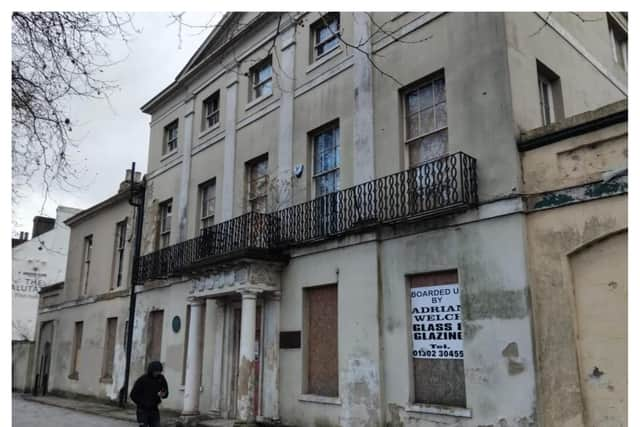
Fire crews have spent the night tackling a blaze at a derelict and historic Grade II listed building in Doncaster city centre.
South Yorkshire Fire and Rescue Service crews were called to Denison House in South Parade in the early hours of this morning.
Earlier, a SYFR spokesperson said: “We currently have five fire engines in attendance at a building fire on South Parade, Doncaster.
“Please avoid the area while crews work to bring this incident to a safe conclusion.

“Residents living nearby should keep windows and doors closed due to smoke in the area.”
The building, which has lain derelict for years – was once of the home of the borough’s richest person.
The building has been boarded up and crumbling for many years, awaiting its fate.
Builders were spotted at the Georgian property – which was once the home of railway pioneer and politician Sir Edmund Beckett-Denison – in December 2024, but the fate of the building remains a mystery.
It went up for auction in 2019 with a guide price of £200,000 with proposals mooted at the time to turn the imposing building into 11 apartments.
However, there has been little work at the building in recent years, with the mansion continuing to fall into disrepair.
As chairman of the Great Northern Railway, Beckett-Denison lobbied to make Doncaster a key staging post on the fastest railway route from London to the North East and Scotland.
He lived in the building between 1855 and his death in 1874.
The house was converted into council offices in the 20th century before being vacated.
Born in Leeds in 1787, he settled in Doncaster in 1818, becoming the town’s richest citizen, with sis wealth coming from his share in the Beckett family bank.
He became active in municipal and county politics, and in the 1841 general election was elected Tory MP for the West Riding.
Having expected an unopposed return in 1847, he withdrew when the Liberals nominated Richard Cobden, but was returned at a by-election in 1848 and sat until 1859.
He was close to Sir Robert Peel – he supplied Peel with the horse that threw and fatally injured him - although he voted against the repeal of the Corn Laws in 1846, by 1848.
Beckett died at Doncaster, aged 87, on 24 May 1874 with his funeral taking place at nearby Christ Church, where he was buried in a family vault.
His name lives on across the city, with another building, also called Denison House alongside ther railway station and Beckett Road in Wheatley also named in honour of his family.
We have asked South Yorkshire Fire and Rescue Service for further details.