
Doncaster school worker with nine brain tumours backs funding plea
She worked at Sir Thomas Wharton Academy before her diagnosis
A Doncaster school worker diagnosed with nine brain tumours has backed a charity’s call for more funding into the condition.
Laura Critchley, a special needs education director at Doncaster’s Sir Thomas Wharton Academy before her diagnosis, is supporting a campaign by Brain Tumour Research to increase funding into research.
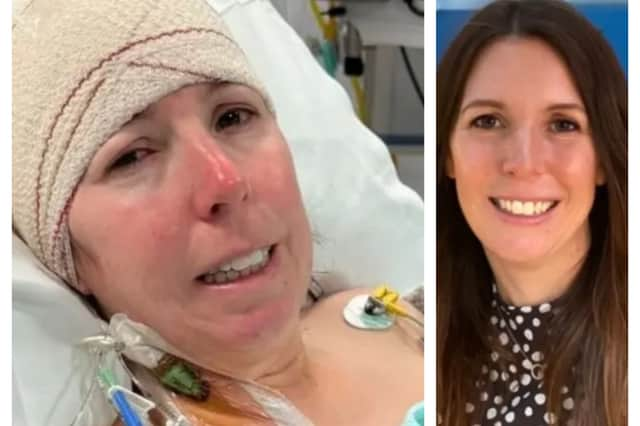

Laura, from Swinton, underwent surgery to remove five growths, but doctors said four were inoperable and predicted more were likely to appear.
The 40-year-old mother-of-two is supporting BTR's appeal for an increase in national investment into research to at least £45m a year by 2029.
Laura said she had been presenting a meeting in May 2025 when she suddenly became confused and unable to talk, and later when a colleague tried to help her to her car she could not remember how to start it.
Initially thinking she may have suffered a stroke she went to Doncaster Royal Infirmary where scans revealed a series of tumours.
Laura said the diagnosis had come "totally out of the blue" and had "totally turned our world upside down".
"I'd just thought maybe this is what 40 looks like," she said.
Want more stories like this? Click here to get our daily newsletter
"Never in the world would I ever have thought I had a brain tumour."
She said everything had changed since the diagnosis but the "biggest hurdle" was the "grief and psychological impact of this on me and my family".
Dr Karen Noble, research and policy director at Brain Tumour Research, said brain tumours kill more children and adults under 40 than any other cancer.
"Laura's story highlights why we urgently need the government to support an increase in national investment in research," she said.
She said there was "critically low funding" and the "urgent progress" to take the science out of the lab and into patients' lives could not happen without adequate funding.
Laura, who worked as a SEND director at a multi academy trust, said despite being away from her job it had been "a massive positive" to be able to be "the best mum and really present for my sons" while her family came to terms with her diagnosis.
"It's tough for families," she said.
"When you get a diagnosis it's not just the impact on you, it's every person in your life.
"It just goes to show how important research is.
"Brain tumours affect more of us than you would ever think, and yet funding and awareness remains critically low.
"More investment is needed to give hope to people and families like mine.
"I want people to have more understanding not to take life for granted.
"Things can change in a heartbeat - just be aware of that."