
This is how much South Yorkshire knife robberies have fallen by after Government targets 'high risk areas'
The number of robberies involving a knife has fallen in South Yorkshire, after months of targeted police action in the ‘seven highest risk areas,’ according to new data published by the Government.
After seeing a stark rise in knife-enabled robbery in the year to June 2024, driven by a 14 per cent increase across seven police forces, Home Secretary Yvette Cooper set up a dedicated police taskforce in October 2024.
South Yorkshire is among the seven police forces, and after nine months of activity, there has been a 6 per cent overall annual reduction compared with the previous year.
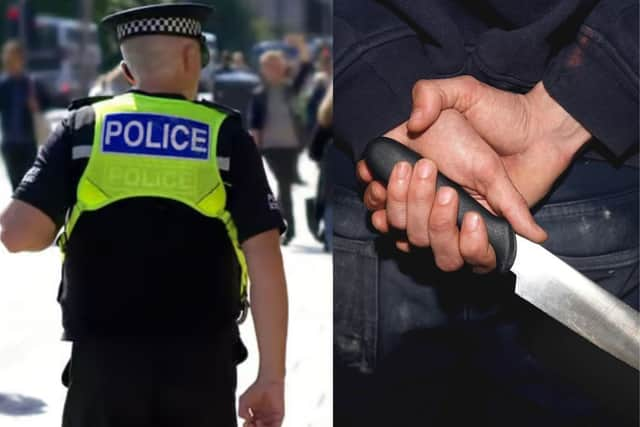

Newly-released Government figures show that the number of knife-enabled robberies reported in the county fell from 595 in the year running between June 2023 and June 2024, to 560 in the year from June 2024 to June 2025, representing a six per cent reduction.
That compares with the 618 knife-enabled robberies recorded between June 2022 and June 2023, following which there was a four per cent reduction.
The Government says the reduction has been driven by intense police efforts and a range of tactics, including upping visible patrols, using drones, knife arches and detection dogs to support police on the ground, and deploying plain clothes officers.
The percentage change seen in the other ‘high risk’ force areas between June 2024 and 2025, when compared with the previous year, is as follows:
- Metropolitan Police: 2 per cent reduction
- West Midlands: 25 per cent reduction
- Greater Manchester: 4 per cent increase
- West Yorkshire: 7 per cent decrease
- Avon and Somerset: 9 per cent decrease
- British Transport Police: 24 per cent decrease
The average reduction in reported knife-enabled robberies, across the seven ‘high-risk’ areas, is one of six per cent.
Ms Cooper said of the figures: “Since day one we have acted with urgency to turn the tide on knife crime, which destroys lives and devastates communities.
“When we came to office, knife-enabled robbery was increasing at a concerning rate, but we have now started to drive numbers of those offences down through the work of our dedicated taskforces, and as a result, we have also seen the first small reduction in overall knife crime for four years.
“The drop in knife enabled robbery in key problem areas shows the impact that our strong new action on knife crime is having, but we now need to supercharge these efforts through more smart and targeted interventions.
“Anyone can be a victim of knife crime, but new ‘hex mapping’ technology shows that the vast majority of knife crime is concentrated in a relatively small, hyper-concentrated number of areas.
“As part of the Plan for Change, we will use that new technology to support our mission to halve knife crime over the next decade.
“In the 2020s, the way to be tough on crime and tough on the causes of crime is also to be smart on crime, using the latest technology to target criminals and problem areas, and keep the country safe.”
The figures have been released in the days after the Government banned ninja swords, with the change in the law coming into force on August 1, 2025.
The majority of ninja swords have a blade between 14 inches and 24 inches with one straight cutting edge with what is known as a tanto style point.
The change in the law means it is now illegal to possess, manufacture, import or sell ninja swords. Anyone caught in possession of a ninja sword in private could face six months in prison, and this will increase to two years under new measures laid in the Crime and Policing Bill. There is already a penalty of up to four years in prison for carrying any weapon in public.
Ahead of the ban, at least a thousand deadly weapons have been handed in following the country’s largest weapons surrender scheme to date.
Launched in June, the Home Office developed this scheme with members of the Coalition to Tackle Knife Crime to provide a broader range of ways the public could surrender weapons outside of police stations.
Pooja Kanda, knife crime campaigner and mother to Ronan said:“Ronan was just 16 years old when his life was stolen by a 22-inch ninja sword that should never have been so easy to buy.
“Ronan’s Law is not only a step towards justice for my son, but for every parent who wants to see their child come home safely.
“This law is about saving lives, closing dangerous loopholes, and holding those responsible to account.
“The government's knife surrender scheme has been a sign of commitment to tackling the scourge of knife crime. While there is still much more to do, these are significant steps in the right direction."
Ronan’s Law will also see the government bring in the toughest measures to date to tackle the sale of weapons online – requiring retailers to report bulk or suspicious knife orders to the police; put in place more stringent age-verification checks and impose significant fines on tech executives whose platforms fail to prevent illegal sales.
As part of the Government’s mission to halve knife crime over the next decade the Home Office is also set to deliver a pilot using sophisticated new mapping technologies to target hyper-concentrated knife crime hotspots, backed by up to £5 million this year.
It says this funding will be targeted towards 50 of the top 100 hyper-local knife crime hotspots to trial targeted intervention tactics and prevent further offending.
This could include using more facial recognition and advanced knife detection technology, or use of police drones to support the increased presence of police officers in our communities – part of the government’s Neighbourhood Policing Guarantee.
These activities are taking place against the backdrop of the summer-long Safer Streets Initiative launched by the Home Secretary to tackle town centre crime, which will seek to deliver a smarter, more visible police and community operation across the country.