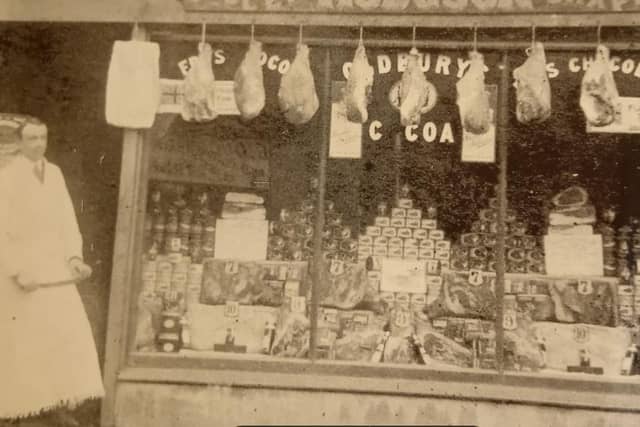

The window is most ornately decorated with a prolification of canned foods – mostly it seems either tinned salmon or pilchards.
The numbers on the notices I find a mystery but could they have something to do with prices? No doubt the assistant in the doorway was the fellow who would visit you to take your order and would later deliver it to your door – common practice with the grocers at this time.
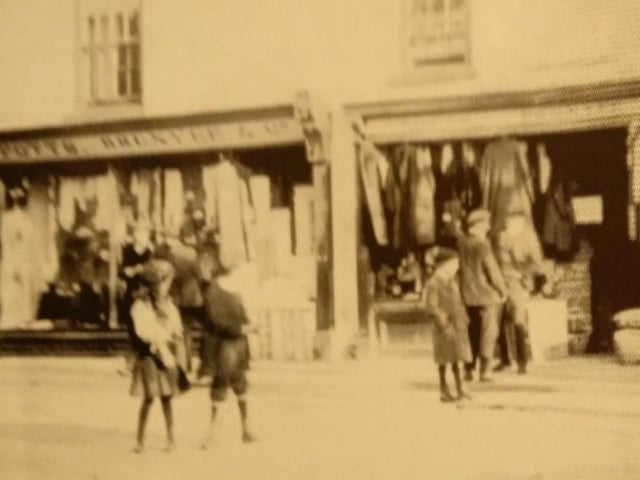
In the 1930s the principal streets of Crowle were lined with shops and businesses of all description. It was called the Emporium of the Isle and would have done large towns proud.
Potts, Brunyee and Co seen here were situated on the corner of High Street and Chancery Lane. They sold a multitude of
various articles and above the shop was their factory which made clothes.
A good number of males and females worked there and they were noted for making outfits for the workers taken on by farmers at the annual November hirings in the Market Place.
The ‘statis’ (as the locals called the statute hiring fairs) were still held at Crowle as late as the 1930s.
Moles skins and corduroy trousers were from 9s11d to 19s6d per pair; long johns from 2s11d 6s4d; shirts 4s6d each and suits could be bought for £1.
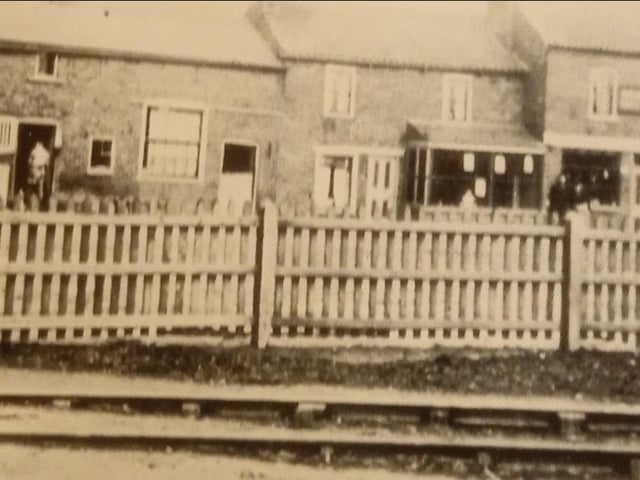
The Market Place view of Keadby in the 1930s shows shops arranged the bend in the old village north of the canal. We see a bakers, grocers, butchers and a shoe shop.
On the far right is the old South Yorkshire Commercial Hotel which was ran by Mr Albert W Bradley.
The railway line in the foreground is the one leading to the coal chute from which coal was shipped.
In the early 20th century Belton’s Westgate Road was lined with shops and businesses for a mile or more before reaching Grey Green.
Older maps show Westgate printed in larger letters than Belton itself – perhaps an indication of the one time importance of
this part of the village.
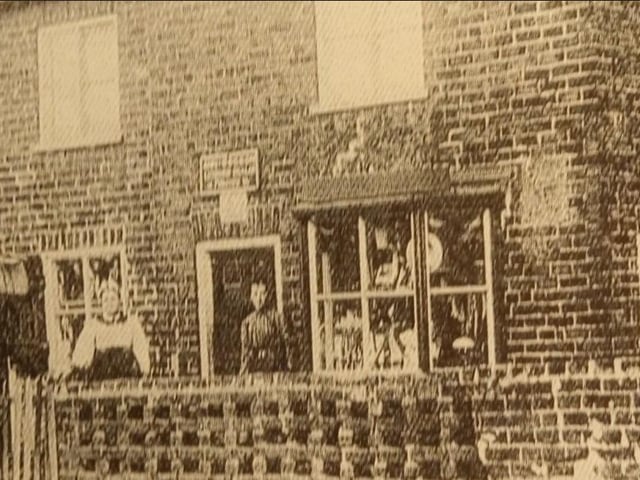
Anne Coggon’s general store and drapery is shown here near where the Folly Drain runs. We know it was there in the 1890s for
on 22nd February 1896 she advertised a 21 day sale.
This house was pulled down in 1940 and a bungalow was built on the site.