
Plans to ship Bassetlaw intensive care unit critically ill patients out to Doncaster revealed
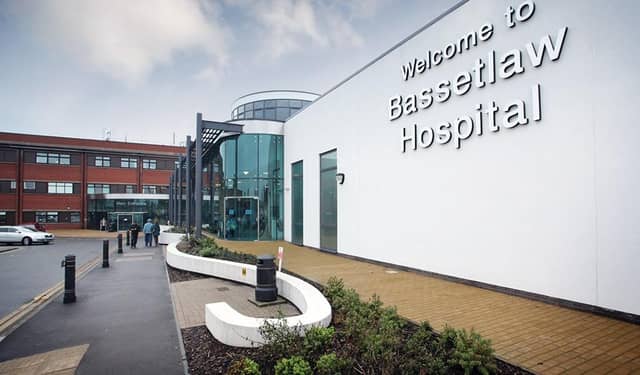

Doncaster & Bassetlaw Teaching Hospitals NHS Foundation Trust is planning to start routinely transferring critically ill patients by ambulance from Bassetlaw Hospital to Doncaster, Unite revealed today.
In online messages during a clinical governance meeting, a divisional director confirmed that the plans would reduce the number of ICU patients at Bassetlaw.
The director stated that under the plans to transfer 50 per cent of level three patients (those who are ventilated or have multiple organ failure) ‘the numbers in Bassetlaw really do go down’.
His statement contradicts the trust’s claims that Bassetlaw ICU nurses need to travel to work in Doncaster for at least two months a year as they risk being deskilled because of a lack of exposure to such patients.
The trust’s own data shows that there has not been a downward trend, and that per capita, nurses at Bassetlaw have a similar or higher exposure to level three patients than nurses at Doncaster.
The nurses have voted for industrial action over the plans but have agreed to delay announcing strike dates to allow talks with the trust to take place.
Unite general secretary Sharon Graham said: “These statements confirm the nurses’ concerns that the trust’s plans are about decommissioning by stealth. They know this will not benefit patients or staff. They have Unite’s unflinching support in their fight to prevent Bassetlaw’s critical health services being rundown.”
The nurses are warning that moving seriously ill patients unnecessarily risks their safety. Unite understands that doctors at Bassetlaw have not been formally consulted on the plans but that at least one consultant shares the nurses’ safety views.
Unite regional officer Chris Rawlinson said: “Bassetlaw ICU patients are facing a double safety risk. Firstly, from the unnecessary 20-mile ambulance drive while being critically ill and then from the dangers of staff exhaustion.
"The nurses already work 13-hour shifts. Expecting them to commute for an hour and a half for those who drive and three hours for those use public transport on top of that will result in burnout.”
The Free Press has approached DBTH for a response and we will update you as soon as we can.